
The Crunch That Saved My Morning
There’s a specific kind of magic that happens when a buttery, crunchy biscuit meets a steaming mug of dark roast coffee. It’s a symphony of textures—the gentle *crackle* as you dip, the brief moment of tension, and then that glorious, yielding softness. I wasn’t always a rusks person, though. My introduction was a bleary-eyed morning in a friend’s kitchen, where they handed me a glass of milk and a chunk of something that looked suspiciously like a dry brick. “Trust me,” they said. And oh, I did. One bite of that South African Beskuit Rusks with Coffee, and I was a convert for life. It’s not just a biscuit; it’s a ritual. A hug in food form.
This recipe is my love letter to that memory. It’s for the mornings that need a little extra grounding and the afternoons that demand a crunchy companion. Forget flimsy store-bought cookies; this is the real deal. It’s the kind of bake that makes your house smell like a cozy European café and leaves you with a sense of accomplishment that lasts all day.
Recommended Product
 -40%
-40%
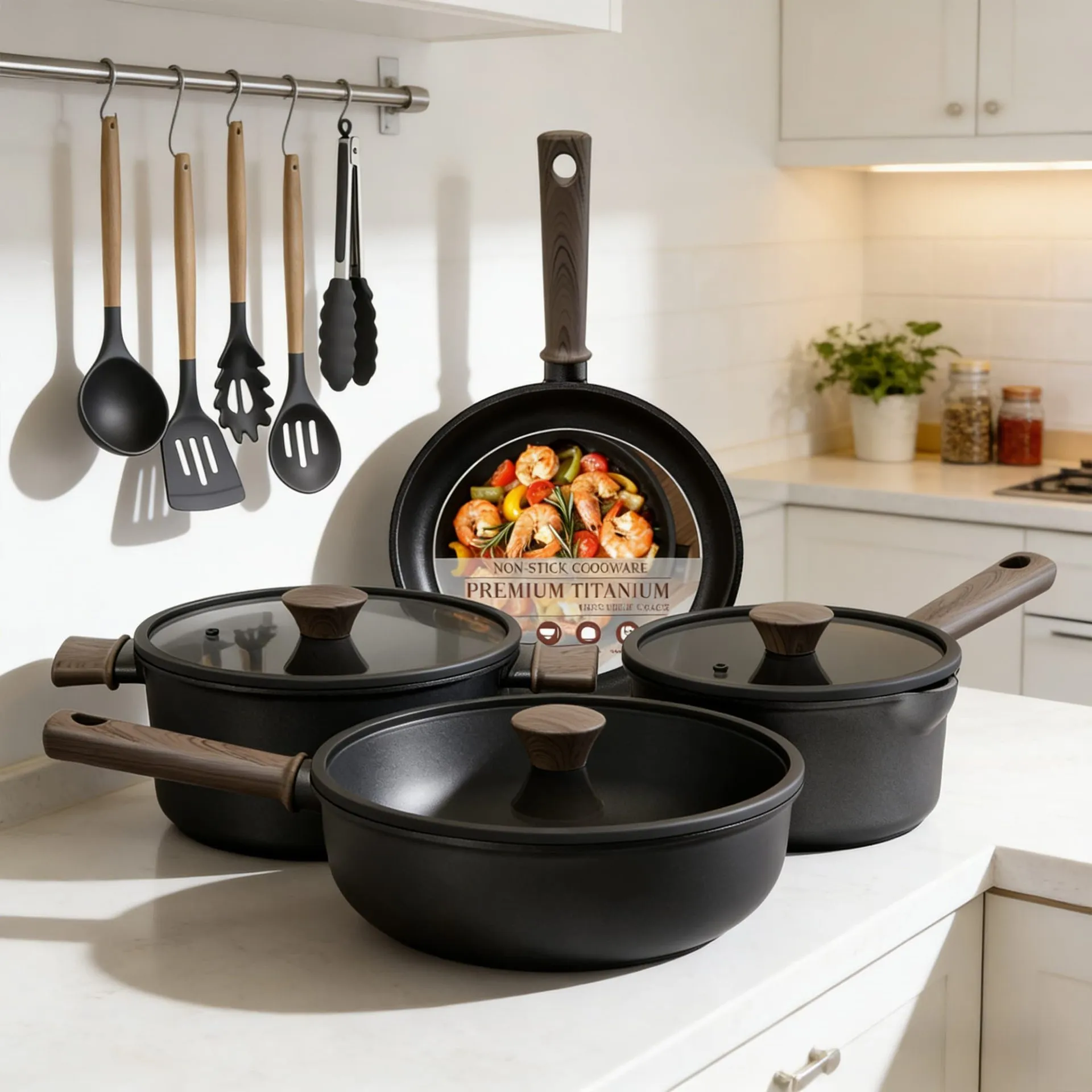
Astercook 21‑Piece Non‑Stick Ceramic Cookware Set with Detachable Handles
- Pieces →: 21‑piece set with pots, pans, lids & accessories
- Handles →: Secure removable/detachable handle system for space saving & oven use
- Non‑Stick Coating →: Premium ceramic non‑stick free of harmful PFOA chemicals for healthier cooking
- Cleanup →: Easy to clean thanks to non‑stick surface and detachable handles
Why These Rusks Are Your New Breakfast Obsession
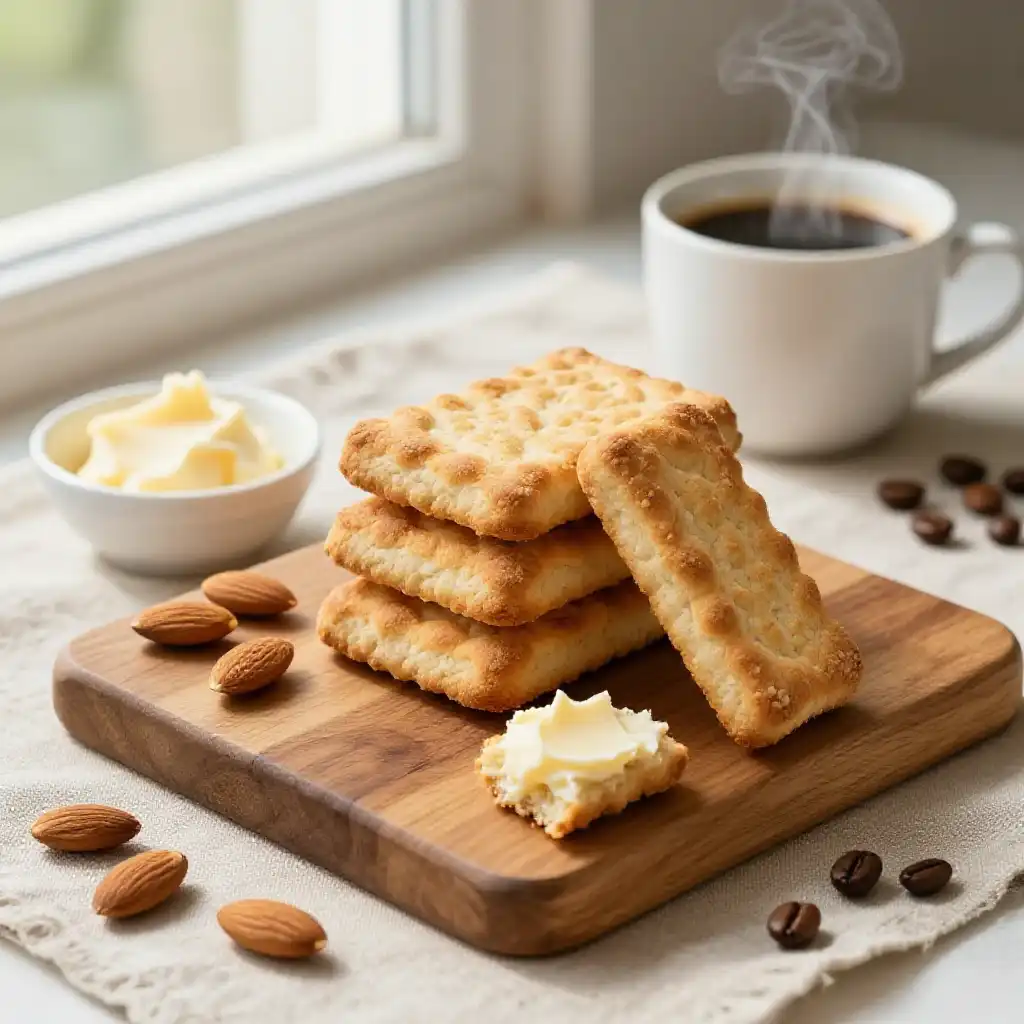
Let’s be real. Most breakfasts are a race against time. You’re shoving toast in your mouth while trying to find your keys. These rusks demand you slow down. They are the culinary equivalent of hitting the snooze button—in the best way possible. What makes them so special is their duality. On their own, they’re a robust, satisfyingly crunchy snack, perfect for nibbling. But introduce them to coffee, and they transform. They become this incredible, spongy, flavor-soaked morsel that feels decadent but is sturdy enough to handle a proper dunking.
🍳 Used in this recipe
Get It on Amazon Basics✔ Free Delivery | ✔ Top Rated | ✔ Budget-FriendlyThe subtle sweetness is a key player here. We’re not aiming for cloying. We want the warm, fragrant notes of vanilla and the nutty depth of brown sugar to complement your morning brew, not fight it. And the process itself? It’s wonderfully simple and forgiving. This isn’t some fussy, delicate pastry that shatters if you look at it wrong. This is a robust dough you can get your hands into. It’s the kind of easy South African Beskuit Rusks with Coffee recipe that builds your baking confidence while filling your kitchen with incredible aromas. It’s a weekend project that pays you back in deliciousness for days. If you’re looking for other ways to elevate your morning routine, sometimes a fresh smoothie is in order, and you can find some great inspiration over at Indixer’s smoothie and drinks category, but for now, let’s get back to the crunch.
The Soul of the Rusk: A Deep Dive into Flour Power
You might think a rusk is just a dry biscuit, but its secret lies in its architecture. And the chief architect is, of course, flour. For this recipe, we’re leaning on all-purpose flour, the versatile workhorse of the baking world. But what are we actually asking it to do? We’re asking it to be the sturdy backbone of our creation. The gluten in the flour, when combined with liquid and fat, forms an elastic network. This is what gives the rusk its structure and that signature “snap.”
But here’s the genius of the twice-baked process. The first bake gives the loaf its cooked-through, cake-like structure. We then slice it and bake it *again*. This second, lower-and-slower bake is all about dehydration. We’re driving out the moisture, leaving behind a perfectly preserved, crunchy version of the original loaf. The flour proteins essentially get toasted, creating a deeper, nuttier flavor profile that you just can’t get from a single bake. It’s food science at its most delicious, transforming a humble loaf into something with an almost indefinite shelf life (if you can resist eating it all, that is). It’s the same principle that makes things like biscotti so addictive—that satisfying, audible crunch is all about moisture control.
🍳 Used in this recipe
Get It on Amazon Basics✔ Free Delivery | ✔ Top Rated | ✔ Budget-FriendlyWhat You Need to Raid the Pantry
The beauty of these rusks is their simplicity. No fancy, hard-to-find ingredients here. It’s all about technique. Here’s what you’ll need to gather:
The Dry Team
– **All-Purpose Flour:** The foundation. Make sure it’s fresh.
– **Brown Sugar:** For a hint of caramel warmth and moisture. You can use light or dark.
– **Baking Powder:** Our main leavening agent for a bit of lift.
– **Salt:** Don’t skip it! It balances the sweetness and makes all the other flavors pop.
– **Instant Coffee Granules:** The “with Coffee” part isn’t just for dipping! A little bit in the dough adds an incredible depth and color.
The Wet Team
– **Unsalted Butter:** Melted and cooled. This is where the richness comes from. It should be good quality.
– **Large Eggs:** For binding everything together.
– **Vanilla Extract:** Pure vanilla, if you can. It’s the soul of the bake.
– **Buttermilk:** The secret weapon! Its acidity reacts with the baking powder for a tender crumb and adds a lovely tang.
🍳 Used in this recipe
Get It on Amazon Basics✔ Free Delivery | ✔ Top Rated | ✔ Budget-FriendlyLet’s Get Cooking: The Step-by-Step
Ready to make your kitchen smell like heaven? Let’s do this.
1. **Preheat and Prep:** Crank your oven to 350°F (175°C). Grease and flour a standard 9×5 inch loaf pan. You can also line it with parchment paper for easy removal, which is a pro-move if you ask me.
2. **Mix the Dry Goods:** In a large bowl, whisk together the flour, brown sugar, baking powder, salt, and those instant coffee granules. Whisking is key—it aerates the mixture and ensures everything is evenly distributed. No one wants a salty bite.
🍳 Used in this recipe
Get It on Amazon Basics✔ Free Delivery | ✔ Top Rated | ✔ Budget-Friendly3. **Combine the Wet Team:** In a separate, medium-sized bowl, whisk the melted butter, eggs, vanilla extract, and buttermilk until they’re beautifully combined. It should look like a creamy, uniform liquid.
4. **The Grand Union:** Pour the wet ingredients into the dry ingredients. Grab a spatula and mix until *just* combined. Seriously, stop mixing the second you no longer see streaks of dry flour. Overmixing is the enemy of a tender rusk! The batter will be thick and maybe a little lumpy—that’s totally fine.
5. **First Bake:** Scrape the batter into your prepared loaf pan and smooth the top. Bake for 45-55 minutes, or until a toothpick inserted into the center comes out clean. Your house will now smell unbelievable. Let the loaf cool in the pan for about 10 minutes before turning it out onto a wire rack to cool *completely*. This is important. If you try to slice a warm loaf, it will crumble.
🍳 Used in this recipe
Get It on Amazon Basics✔ Free Delivery | ✔ Top Rated | ✔ Budget-Friendly6. **The Transformation:** Once the loaf is completely cool, turn the oven down to a low 300°F (150°C). Using a sharp serrated knife, slice the loaf into 1/2-inch thick pieces.
7. **The Second Bake (The Magic!):** Arrange the slices in a single layer on a baking sheet, either cut-side up or down (it doesn’t really matter). Bake for 15-20 minutes, then flip them all over and bake for another 15-20 minutes. You’re looking for them to become golden brown, dry, and completely crisp. They should feel light and make a satisfying sound when you tap them.
8. **Cool and Store:** Let the rusks cool completely on the baking sheet. They will continue to crisp up as they cool. Store them in an airtight container. And yes, you absolutely can freeze them!
🍳 Used in this recipe
Get It on Amazon Basics✔ Free Delivery | ✔ Top Rated | ✔ Budget-Friendly
Rusk Pitfalls: A Guide to What Not to Do
Even the simplest recipes have tripwires. Here are a few common blunders to avoid on your path to rusk nirvana.
* **The Impatient Slice:** I mentioned it before, but it’s worth repeating. **Do not slice the loaf while it’s warm.** It might feel cool to the touch on the outside, but the inside is still holding onto heat and moisture. Slicing too soon will result in a crumbly, frustrating mess. Let it cool. All the way. Go water your plants or check your email.
* **The “Doughy” Center:** If your final rusks are still a bit chewy or soft in the middle, it means they didn’t get enough time in the oven for the second bake. Don’t be afraid to give them an extra 5-10 minutes. You’re trying to dehydrate them, so they need that time. The goal is crunch, not “pleasantly chewy.”
* **The Overmixing Sin:** I hammered this point in the instructions, but it’s the most common baking mistake. When you overmix the batter, you develop the gluten too much. Instead of a tender rusk, you’ll get something tough and bready. Mix with a gentle hand and a light heart.
The Perfect Dunking Scenario: Setting the Vibe
South African Beskuit Rusks with Coffee aren’t just food; they’re an atmosphere. The ideal scenario? A rainy afternoon. You’re curled up in your favorite armchair with a good book, a steaming mug of dark roast coffee (or a milky rooibos tea, if you’re feeling authentic), and a heaping bowl of these golden beauties. The world outside is grey, but in here, it’s warm, crunchy, and smelling of vanilla and coffee.
🍳 Used in this recipe
Get It on Amazon Basics✔ Free Delivery | ✔ Top Rated | ✔ Budget-FriendlyThey’re also the perfect “I’ve got guests” snack. There’s no fuss. You just put the bowl on the table and watch them disappear. They’re a conversation starter. “What *is* this crunchy perfection?” they’ll ask. And you, the hero of the hour, can just smile and say, “It’s a rusk.” It’s a simple, unassuming powerhouse that turns any casual gathering into something a little more special.
Rusk Rundown: Your Questions, Answered
How to freeze South African Beskuit Rusks with Coffee?
This is the best part! These rusks are freezer champions. The key is to make sure they are **completely cooled** before you freeze them. If there’s any warmth left, you’ll get ice crystals and they’ll lose their crunch. Once cool, pop them into a freezer-safe airtight bag or container. They’ll keep beautifully for up to 3 months. To thaw, just take them out and let them sit at room temperature for an hour or so. You can even eat them straight from the freezer—they have a wonderful, icy crunch!
Calories in South African Beskuit Rusks with Coffee?
While it varies based on the exact size of your rusks, a typical rusk from this recipe will land somewhere in the 80-120 calorie range. It’s a satisfying crunch that feels far more indulgent than it actually is. Because they’re so crunchy, you tend to eat them slowly and mindfully, which is a win in my book.
🍳 Used in this recipe
Get It on Amazon Basics✔ Free Delivery | ✔ Top Rated | ✔ Budget-FriendlyMy dough seems too wet, what should I do?
The dough for this should be quite thick and sticky, almost like a very thick cake batter, not a kneadable bread dough. If it feels like soup, you might have mis-measured your buttermilk. If it’s just very sticky, that’s normal! Just use a spatula to scrape it into the pan. Don’t add extra flour, as this will make your rusks tough.
Can I add other flavors?
Absolutely! This recipe is a fantastic base. Try adding a teaspoon of ground cinnamon or cardamom to the dry ingredients. For a festive twist, some orange or lemon zest is divine. A handful of poppy seeds or sesame seeds mixed into the batter also adds a lovely texture. The world is your rusk-oyster!
My rusks are browning too fast on the outside but are still soft inside. Help!
Your oven might be running hot. The second bake is a low-and-slow process. If you notice this happening, lower the oven temperature by 25°F (or about 10°C) and leave them in for a bit longer. The goal is to dry them out, not to toast them quickly.
South African Beskuit Rusks with Coffee

Ingredients
Ingredients
- 3 cups all-purpose flour sifted
- 1 tsp baking powder
- 0.5 tsp salt
- 0.5 cup granulated sugar
- 0.5 cup unsalted butter cold and cubed
- 1 large egg beaten
- 0.5 cup buttermilk
- 1 tsp vanilla extract
Notes
🍳 Used in this recipe
Get It on Amazon Basics✔ Free Delivery | ✔ Top Rated | ✔ Budget-Friendly