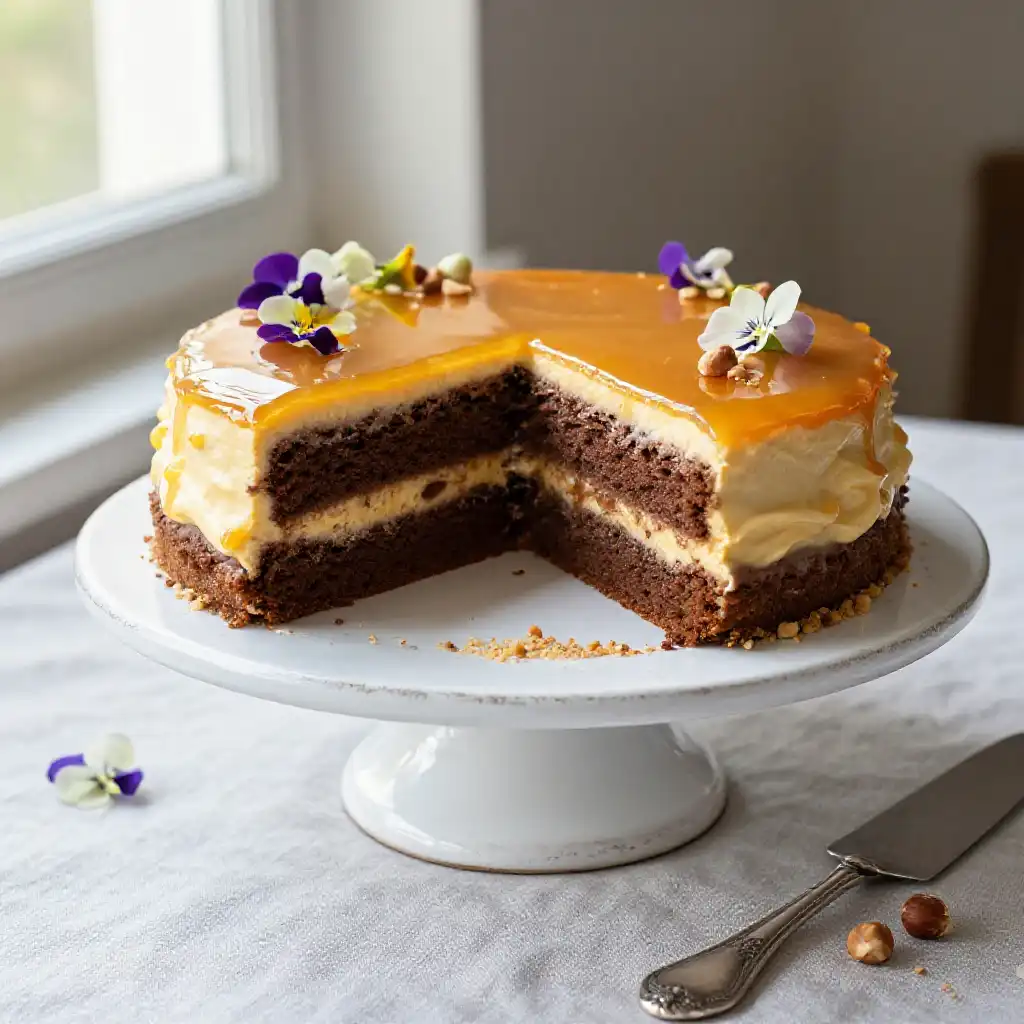
There’s a certain magic to old-world desserts, a kind of patisserie poetry that whispers of grand cafes and velvet-cushioned chairs. I remember the first time I laid eyes on a Dobos Torte. It wasn’t just a cake; it was an architectural marvel, a tower of defiance against the tyranny of the simple slice. The gleaming, knife-sharp edges of dark chocolate sponge promised a thousand layers of flavor, and the crown of glistening, amber-hard caramel was like a halo for the sugar-obsessed. It tasted like a symphony: the deep, slightly bitter snap of the caramel giving way to the creamy whisper of buttercream and the tender, melt-in-your-mouth chocolate sponge. It’s the kind of cake that makes you want to learn a new language, just to properly describe it. And today, we’re bringing that Viennese coffeehouse elegance right into your kitchen.
Why This Torte Will Become Your New Obsession
Let’s be honest, the name “Hungarian Dobos Torte with Caramel Buttercream and Chocolate Layers” sounds intimidating. It sounds like something you order in a whisper and pay a month’s rent for. But the secret? It’s less about brute force and more about patience and precision. This isn’t a cake you throw together in a rage-bake; it’s a meditation. The beauty of this specific recipe lies in its balance. We’re not aiming for tooth-achingly sweet. The bittersweet chocolate layers cut through the richness of the buttercream, while the caramel glaze adds a shatteringly crisp texture that you just don’t get from a simple ganache. Plus, it’s a showstopper. When you unveil this on the table, you’re not just serving dessert; you’re making a statement. And honestly, for something this elegant, the ingredient list is surprisingly humble. No exotic extracts or hard-to-find flours. Just good, honest pantry staples coming together to act far more fancy than they have any right to. It’s the ultimate “bake above your paygrade” recipe, and I’m here to tell you, you absolutely can.
Recommended Product
 -40%
-40%
Astercook 21‑Piece Non‑Stick Ceramic Cookware Set with Detachable Handles
- Pieces →: 21‑piece set with pots, pans, lids & accessories
- Handles →: Secure removable/detachable handle system for space saving & oven use
- Non‑Stick Coating →: Premium ceramic non‑stick free of harmful PFOA chemicals for healthier cooking
- Cleanup →: Easy to clean thanks to non‑stick surface and detachable handles
The Alchemy of Caramel: More Than Just Burnt Sugar
Before we even think about flour, we need to talk about the star of the show, the halo of our Torte: the caramel. Making caramel isn’t cooking; it’s alchemy. You’re taking plain old granulated sugar and, with just the application of heat, transforming it into something entirely new. But how? It’s all about the Maillard reaction and caramelization. As you heat the sugar, the molecules begin to break down and re-form into hundreds of new, complex compounds. At around 320°F (160°C), the sugar melts completely and starts to turn a pale straw color. This is where the magic happens. Keep going, and you’ll get to that deep, nutty, bittersweet stage we need for the glaze. The secret weapon in our caramel buttercream isn’t just the sugar, though. It’s the custard base of egg yolks and butter. By tempering the hot caramel into the yolks, you stop it from becoming a rock and instead create a rich, custardy base. The butter then emulsifies everything into a velvety, dreamy buttercream. It’s science you can taste, a delicious lesson in chemistry.
🍳 Used in this recipe
Get It on Amazon Basics✔ Free Delivery | ✔ Top Rated | ✔ Budget-FriendlyNow, for the chocolate layers themselves. We’re aiming for a sponge that is light, tender, but sturdy enough to support the weight of the buttercream. This is achieved by whipping whole eggs and sugar to a magnificent “ribbon stage”—where the mixture is so aerated and thick that when you lift the whisk, it leaves a trail that holds its shape for a moment. This is your cake’s lift, no baking powder needed! Gently folding in the flour and cocoa powder preserves those precious air bubbles, ensuring a delicate crumb. It’s a technique that feels like you’re handling a cloud. If you’re looking for other elegant dessert inspirations, sometimes I browse indixer.com for fresh ideas on flavor pairings. But for now, let’s focus on this masterpiece.
Let’s Get Cooking: The Step-by-Step
Alright, deep breath. We’ve got this. Think of this as a delicious assembly line.
What You Need to Raid the Pantry
For the Chocolate Sponge Layers:
🍳 Used in this recipe
Get It on Amazon Basics✔ Free Delivery | ✔ Top Rated | ✔ Budget-Friendly- 6 large eggs, at room temperature
- 1 cup (200g) granulated sugar
- 1 teaspoon vanilla extract
- ¾ cup (95g) all-purpose flour
- ¼ cup (25g) unsweetened cocoa powder, plus extra for dusting
- Pinch of salt
For the Caramel Buttercream & Glaze:
- 1 cup (200g) granulated sugar, divided
- ⅓ cup (80ml) water
- 4 large egg yolks
- 1 cup (226g) unsalted butter, softened but cool, cut into cubes
- 1 teaspoon vanilla extract
Equipment: Two 8-inch round cake pans, parchment paper, a stand mixer or hand mixer, a heavy-bottomed saucepan, and a candy thermometer (your best friend for this recipe!).
The Sponge Assembly Line
First, preheat your oven to 350°F (175°C). Grease your two cake pans, line the bottoms with parchment paper, and dust the sides with cocoa powder. This prevents sticking and gives the cakes a beautiful dark edge. Now, in the bowl of your stand mixer, combine the eggs and sugar. Whip them on high speed for a good 8-10 minutes. You want it to be pale, thick, and triple in volume. When you lift the whisk, the batter should fall in a thick, slow “ribbon” that sits on the surface for a few seconds before dissolving. This is the soul of your cake. In a separate bowl, sift together the flour, ¼ cup cocoa powder, and salt. Sifting is non-negotiable; it gets rid of lumps and makes the flour lighter, so it doesn’t deflate your beautiful egg foam. Gently fold the dry ingredients into the egg mixture in three additions. Use a spatula, be patient, and fold from the bottom up. Overmixing is the enemy of a tender sponge! Divide the batter evenly between your two prepared pans. Bake for 18-22 minutes, until the top is springy to the touch and a toothpick inserted into the center comes out clean. Let them cool in the pans for 10 minutes before turning them out onto a wire rack to cool completely. The smell alone is worth the effort.
🍳 Used in this recipe
Get It on Amazon Basics✔ Free Delivery | ✔ Top Rated | ✔ Budget-FriendlyThe Caramel Buttercream Wizardry
Here’s where we earn our stripes. In your heavy-bottomed saucepan, combine ½ cup of sugar with the water. Stir just to moisten the sugar, then stop stirring. Turn the heat to medium-high and let it do its thing. Watch it like a hawk. It will bubble furiously, then start to turn color. We’re aiming for a deep amber, like a shiny copper penny. If you have a thermometer, 245°F (118°C) is your target. While the sugar is bubbling away, in a separate heatproof bowl, whisk the egg yolks with the remaining ½ cup of sugar until pale and creamy. This is your insurance policy against scrambled eggs. Once the caramel is ready, remove it from the heat. Now for the slightly scary part: while whisking the yolks constantly, SLOWLY pour the hot caramel into them. The mixture will steam and seize, but keep whisking! It will smooth out. Let this caramel-yolk custard cool to lukewarm. This is crucial. If it’s too hot, it will melt your butter into a greasy mess. Once cool, start adding your softened butter, one cube at a time, beating well after each addition. At first, it might look curdled. Don’t panic! Just keep beating. Suddenly, it will transform into a silky, pale, and gloriously smooth buttercream. Beat in the vanilla. You’ve just made liquid gold.
Common Pitfalls: A Guide to Not Screwing It Up
Even the most seasoned bakers have Dobos moments. Let’s sidestep the drama.
The Weeping Buttercream: If your buttercream looks soupy or is “breaking,” your butter was likely too warm or your caramel custard was too hot when you combined them. The fix? Stick the whole bowl in the fridge for 15 minutes, then beat it like it owes you money. It should come back together. Patience is key.
🍳 Used in this recipe
Get It on Amazon Basics✔ Free Delivery | ✔ Top Rated | ✔ Budget-FriendlyThe Rock-Solid Caramel Glaze: You let the caramel for the glaze go just a second too long, and now it’s a hard lump. We’ve all been there. The solution is to gently re-melt it over low heat with a tablespoon or two of water or cream (though for our glaze, water is fine) to bring it back to a pourable, but still thick, consistency. Watch it like a hawk this time!
The Soggy Cake: This happens when you try to assemble while the cakes are still warm. The heat will melt the buttercream, turning your layers into a sad, steamy mess. Let those sponges cool *completely*. Make the buttercream. Put the buttercream in the fridge for 20 minutes to firm up slightly. Then, and only then, should you assemble. A cool cake and a cool buttercream are a match made in heaven.
The Grand Finale: Serving Your Masterpiece
This cake isn’t just for eating; it’s for presenting. The traditional Dobos Torte is a tall, elegant cylinder. Our two-layer version is its charming, accessible cousin. The final touch is the glaze. You’ll make a smaller batch of caramel, just for the top. Pour this hot, liquid gold over the final chilled cake layer and, with a slightly offset spatula, spread it quickly to the edges. It will harden into a gorgeous, glass-like sheen. The sound it makes when you cut into it—that gentle crack—is pure ASMR. This cake demands a certain ambiance. It’s not a Tuesday-night-while-bingeing-a-show cake. It’s a “we survived the week” cake. It’s a “celebrating a small victory” cake. It’s perfect for a rainy afternoon with a cup of black coffee or as the decadent finale to a formal dinner party. Place it on a cake stand, stand back, and accept the applause. You’ve earned it.
🍳 Used in this recipe
Get It on Amazon Basics✔ Free Delivery | ✔ Top Rated | ✔ Budget-Friendly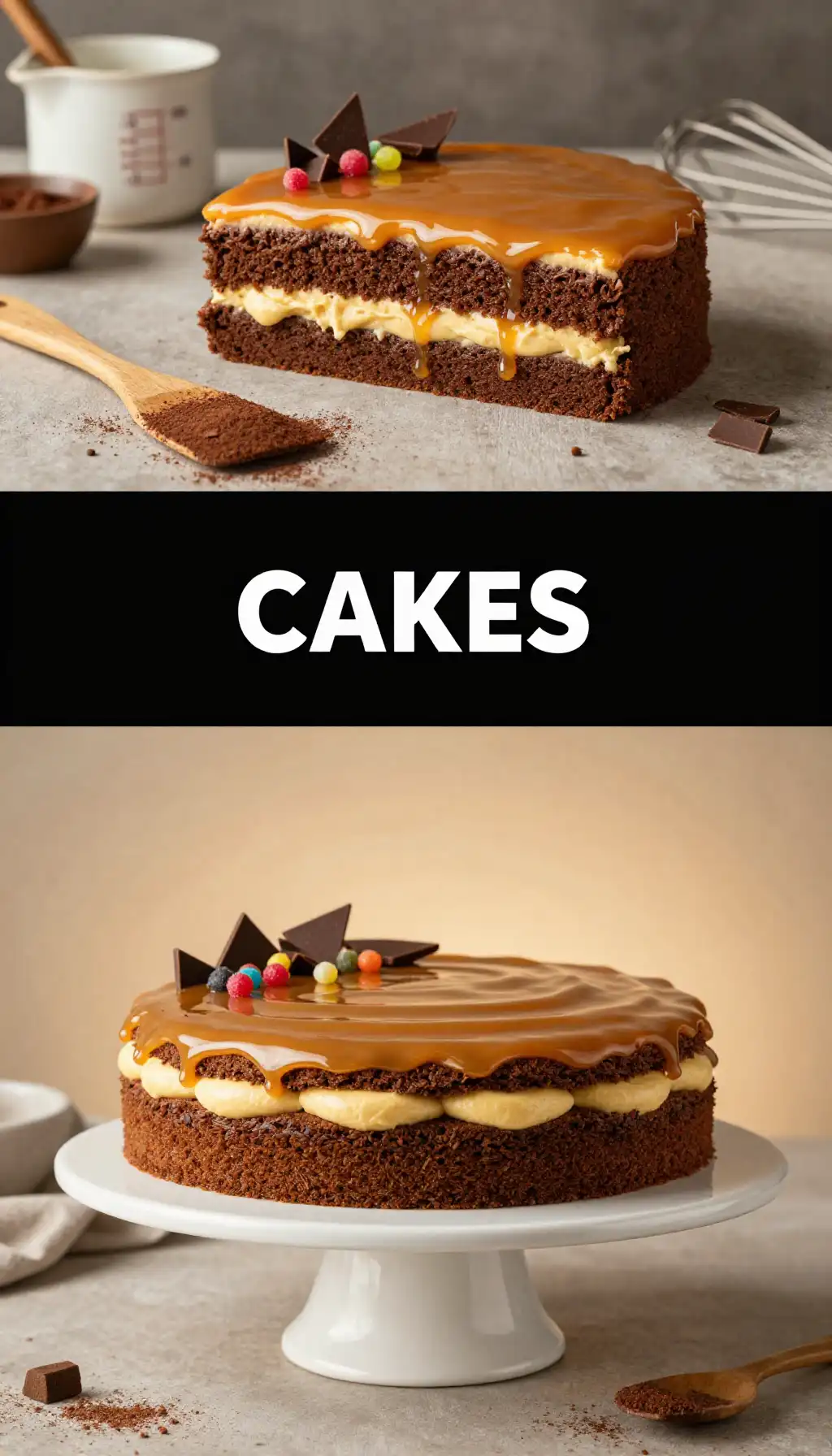
The Finishing School: Frequently Asked Questions
How to freeze Hungarian Dobos Torte with Caramel Buttercream and Chocolate Layers?
Freezing this beauty is absolutely possible, but strategy is everything. The key is to protect that delicate buttercream and the fragile caramel glaze. First, place the fully assembled and glazed cake (or individual slices) in the freezer, uncovered, for about 1-2 hours, or until the caramel glaze is firm. This is called “flash freezing” and it prevents you from smushing anything. Once firm, wrap it tightly in a double layer of plastic wrap, followed by a layer of heavy-duty aluminum foil. It will keep beautifully for up to 3 months. To thaw, transfer it to the refrigerator overnight. Do NOT thaw it on the counter, as condensation will ruin the glaze and make the buttercream weep.
What are the calories in Hungarian Dobos Torte with Caramel Buttercream and Chocolate Layers?
Let’s be real: you don’t make a Dobos Torte because you’re looking for a light snack. This is a celebration of the finer things in life. A typical slice can range from 450 to 600 calories, depending on its size and the richness of your buttercream. It’s packed with sugar, butter, and eggs—the holy trinity of deliciousness. My advice? Don’t worry about the numbers. Savor every single bite, share it with people you love, and balance it out with a long walk. Life is too short to count the calories in a masterpiece.
My caramel is crystallizing. What did I do wrong?
Ah, the dreaded sugar crystallization! This happens when sugar crystals form on the sides of your saucepan and jump back into the melt, causing a chain reaction. The most common culprits are stirring the sugar once it’s melting (a big no-no!) or not dissolving the sugar properly at the beginning. To prevent this, make sure all your sugar is wet before you turn on the heat. You can also brush down the sides of the pan with a wet pastry brush during the initial boiling stage to wash away any stray crystals. If you’re truly worried, pop a lid on the pan for the first minute or two of boiling; the steam will do the work for you.
🍳 Used in this recipe
Get It on Amazon Basics✔ Free Delivery | ✔ Top Rated | ✔ Budget-FriendlyCan I make this recipe into more layers?
Ah, the pursuit of the true, towering Dobos! While this recipe is designed for a manageable two-layer cake, the sponge recipe itself can be used to create more, thinner layers. You would need to divide the batter among three or four pans (or bake in batches) and reduce the baking time accordingly. However, you would also need to make a larger batch of the caramel buttercream to have enough for spreading between all those extra layers. It’s an advanced move that requires more patience and more buttercream, but if you’re feeling ambitious, it is certainly possible to create a taller, more traditional version of this cake. Just be prepared for a true baking marathon!
And there you have it. The secrets to the legendary Hungarian Dobos Torte with Caramel Buttercream and Chocolate Layers, demystified. It’s a journey, for sure, but the destination is a slice of heaven that crackles, melts, and sings with flavor. Ready for more culinary adventures? Explore our collection of slapid.com/recipes// for your next kitchen challenge.
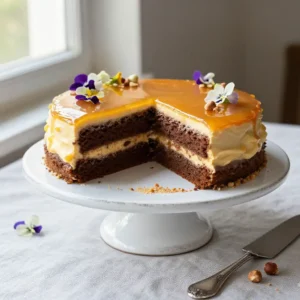
Hungarian Dobos Torte with Caramel Buttercream and Chocolate Layers

Ingredients
Ingredients
- 6 large eggs at room temperature
- 3/4 cup granulated sugar divided
- 1/2 cup all-purpose flour
- 1/4 cup unsweetened cocoa powder
- 1 cup unsalted butter softened for buttercream
- 1 cup powdered sugar
- 1/2 cup heavy cream
- 1 cup granulated sugar for caramel
- 1/4 cup water for caramel
- 1 tbsp unsalted butter for caramel
- 1 tsp vanilla extract
- 1/4 tsp salt
Notes
🍳 Used in this recipe
Get It on Amazon Basics✔ Free Delivery | ✔ Top Rated | ✔ Budget-Friendly