Better Than Takeout Creamy Dutch Oven Japanese Shrimp & Kale Pasta
The Monday Night Miracle That Smells Like a Tokyo Bistro
The rain was doing that thing again. You know the one—drumming a relentless, gray rhythm against the windowpane, turning the world outside into a watercolor blur. My stomach grumbled, a low, mournful sound that echoed the storm. I wanted comfort. I wanted something that felt like a warm hug from the inside out, but without the hassle of a dozen pots and a sink full of dishes. I wanted takeout, but better. That’s when I remembered the Dutch oven, sitting patiently on the shelf, and the idea for this Better Than Takeout Creamy Dutch Oven Japanese Shrimp & Kale Pasta was born.
The moment I started sautéing the garlic and ginger, the entire kitchen transformed. The sharp, pungent aroma cut through the damp air, a promise of the savory, umami-rich magic to come. Then, the shrimp hit the hot oil, and the sound was a glorious sizzle—a tiny, delicious thunderstorm in my pot. This isn’t just a recipe; it’s a sensory experience. It’s the crackle of the sear, the vibrant green of the kale wilting into the creamy sauce, and the final, irresistible twirl of pasta coated in a silky, Japanese-inspired dream. It’s the kind of meal that makes you forget the rain, forget the takeout menu, and just feel utterly, perfectly content.
Why This Dutch Oven Dish is Your New Weeknight Hero
Let’s be real. Most weeknight pasta recipes are a frantic dance of boiling water, draining, and saucing in a separate pan. It’s messy and time-consuming. This Better Than Takeout Creamy Dutch Oven Japanese Shrimp & Kale Pasta throws that chaos out the window. Everything—searing, simmering, and saucing—happens in one glorious, heavy-bottomed pot. The Dutch oven isn’t just a vessel; it’s a flavor conductor. Its even heat distribution ensures nothing burns, and the heavy lid traps steam, making the shrimp incredibly tender and the kale perfectly wilted without turning to mush.
And the flavor? Oh, the flavor. We’re building layers here. We start with the foundational aromatics, then we get a deep, savory sear on the shrimp. The sauce isn’t just creamy; it’s a complex, umami-packed broth infused with soy, dashi, and a hint of something sweet to balance it all out. This isn’t a one-note wonder. It’s a symphony in a pot, and it comes together faster than you can scroll through a delivery app. For more inspiration on building incredible flavors, you can always explore my collection of recipes.
The Secret Weapon: Unpacking the Magic of Dashi
At the heart of this dish’s Japanese soul is dashi, a fundamental broth that is so much more than just “stock.” While Western stocks often rely on long, slow simmers of bones and vegetables, dashi is all about capturing the essence of the ocean and the earth with startling efficiency. The classic version is a clear, golden liquid made by steeping kombu (dried kelp) and katsuobushi (dried, fermented, and smoked skipjack tuna flakes). The kombu provides a deep, oceanic salinity and a unique savory quality known as glutamate, while the katsuobushi adds a smoky, intensely fishy punch and a wealth of inosinate. When these two elements meet in water, they create a synergistic explosion of umami that is far greater than the sum of its parts.
In our Better Than Takeout Creamy Dutch Oven Japanese Shrimp & Kale Pasta, we use dashi as the soul of our sauce. It’s the liquid that carries all the other flavors—the soy, the ginger, the garlic—and elevates them to something truly restaurant-worthy. The natural gelatin in the kombu also helps to give the sauce a subtle, luxurious body that clings to every piece of pasta. Understanding this simple, powerful broth is the key to unlocking authentic Japanese flavor at home. If you’re curious about the science behind this umami bomb, you can dive deeper into this external guide for more context.
The Step-by-Step: Let’s Get Cooking
Ready to create your own masterpiece? Grab your Dutch oven and let’s dive in. This is the fun part where your kitchen starts to smell like a five-star restaurant.
The Flavor Makers: What You Need to Raid From the Pantry
- 1 lb large shrimp, peeled and deveined
- 8 oz spaghetti or linguine
- 1 large bunch of kale, stems removed and leaves chopped
- 4 cloves garlic, minced
- 1 inch fresh ginger, grated
- 2 tbsp soy sauce (or tamari for gluten-free)
- 1 tbsp mirin (sweet rice wine)
- 1 tsp sesame oil
- 1 tbsp olive oil
- 2 cups dashi broth (or use chicken/vegetable broth as a substitute)
- 1/2 cup heavy cream
- Red pepper flakes (optional, for heat)
- Salt and black pepper to taste
- Toasted sesame seeds and sliced green onions for garnish

The Main Event: A Symphony in a Pot
First, pat your shrimp completely dry and season them lightly with salt and pepper. This is crucial for a good sear. Heat your Dutch oven over medium-high heat and add the olive oil. Once it shimmers, add the shrimp in a single layer. Let them sizzle undisturbed for about 90 seconds per side until they’re pink and slightly curled. Don’t crowd the pan! Work in batches if you must. Remove the shrimp and set them aside—they’ll finish cooking later.
In the same pot, lower the heat to medium and add the garlic and ginger. Stir for just 30 seconds until fragrant. Don’t let it burn! Now, pour in the dashi, soy sauce, and mirin, scraping up any delicious browned bits from the bottom of the pot. This is pure flavor. Bring it to a gentle simmer. Add your dry pasta directly into the bubbling liquid. Yes, really! This is the magic of a one-pot dish. The pasta will absorb the broth as it cooks, making the sauce extra starchy and clingy. Stir occasionally to prevent sticking.
After about 8-10 minutes, when the pasta is al dente and most of the liquid has been absorbed, stir in the heavy cream and the chopped kale. The kale will wilt in the residual heat in just a minute or two. Finally, return the cooked shrimp to the pot and drizzle in the sesame oil. Give it all a gentle toss to combine. The sauce should be creamy, glossy, and coat the back of a spoon. Taste and adjust with more soy sauce or a pinch of salt if needed.
Common Pitfalls: How NOT to Mess Up This Masterpiece
Okay, let’s talk about the potential disasters. First, the shrimp. The number one sin is overcooking them. They cook incredibly fast. Remember, they’ll go back in at the end for a final warm-through. If you cook them to rubbery perfection in the first step, you’ve doomed them. Undercook them slightly during the sear. Second, the kale. Don’t you dare throw in the stems! They’re tough and fibrous. Strip the leaves off and chop them. They’ll wilt into silky goodness in no time. Third, the pasta. Keep an eye on it! Since we’re cooking it in the sauce, you need to give it a stir every few minutes to prevent it from clumping together at the bottom. Trust the process, but don’t walk away.
Serving Vibes: Setting the Scene
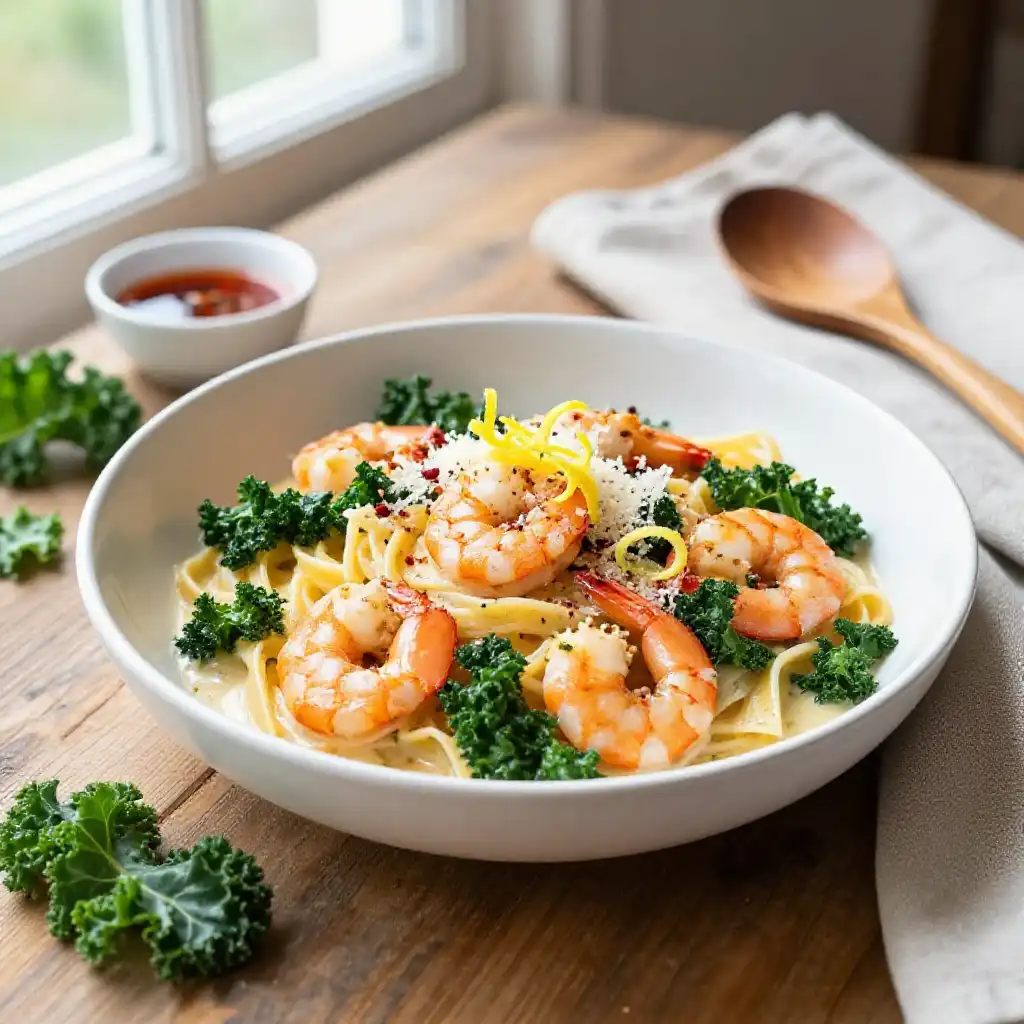
This dish has a personality. It’s cozy and comforting, making it the absolute champion for a rainy Sunday dinner or a chilly evening when you need to be warmed from the inside out. But it’s also surprisingly elegant. Serve it in wide, shallow bowls to show off the creamy sauce. Garnish generously with a shower of toasted sesame seeds and a confetti of sliced green onions for a pop of color and freshness. A squeeze of fresh lime right at the table brightens everything up.
It’s perfect for a solo feast with a good book, but it’s also impressive enough for a casual dinner party. Your guests will be floored that you made this in one pot. Pair it with a simple cucumber salad and some steamed edamame for a full Japanese-inspired experience. It’s a dish that feels both rustic and refined, a true weeknight warrior that dresses up beautifully.
Your Burning Questions, Answered
How to freeze Better Than Takeout Creamy Dutch Oven Japanese Shrimp & Kale Pasta?
While you can freeze this dish, the texture of the creamy sauce and the pasta may change slightly upon reheating. For the best results, I recommend freezing just the sauce and shrimp mixture (without the pasta) for up to 2 months. When you’re ready to eat, thaw it in the fridge overnight, reheat it gently in a saucepan, and cook a fresh batch of pasta to toss with the sauce. If you must freeze the entire dish, let it cool completely, portion it into airtight containers, and freeze for up to 1 month. Reheat gently in a covered pot on the stove, adding a splash of dashi or cream to loosen the sauce.
What are the approximate calories in Better Than Takeout Creamy Dutch Oven Japanese Shrimp & Kale Pasta?
This is a rich and satisfying dish, but it’s packed with protein and nutrients. A serving (assuming the recipe serves 4) is estimated to be around 550-650 calories. This depends heavily on the specific brands of ingredients you use (like the cream and pasta) and your portion size. The shrimp provides lean protein, and the kale is loaded with vitamins A, C, and K. To lighten it up, you could use half-and-half instead of heavy cream or increase the amount of kale.
Can I use frozen shrimp for this recipe?
Absolutely! Just make sure to thaw them completely first. The best way is to let them sit in the refrigerator overnight. If you’re in a pinch, you can place them in a colander under cold running water for 5-10 minutes until thawed. Pat them very, very dry before seasoning and searing. Excess moisture is the enemy of a good sear.
What if I can’t find dashi broth?
No problem at all. While dashi adds authentic Japanese flavor, you can use a high-quality chicken or vegetable broth as a substitute. To mimic some of that umami depth, you could also add a teaspoon of white miso paste (dissolved in a little warm broth first) to the sauce. It won’t be exactly the same, but it will still be incredibly delicious.
Is this dish spicy?
It’s only as spicy as you want it to be! The base recipe is savory and creamy, not hot. We add a pinch of red pepper flakes for a gentle warmth that you can control. Feel free to omit them entirely for a kid-friendly version, or add a generous amount if you love heat. A drizzle of chili oil at the end would also be a fantastic addition for spice lovers.
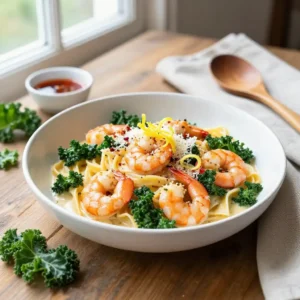
Better Than Takeout Creamy Dutch Oven Japanese Shrimp & Kale Pasta

Ingredients
Ingredients
- 1 lb large shrimp peeled and deveined, tails on or off
- 8 oz spaghetti or fettuccine or your favorite pasta
- 1 bunch kale stems removed, leaves chopped
- 3 cloves garlic minced
- 1 tbsp fresh ginger grated
- 2 tbsp soy sauce or tamari for gluten-free
- 1 tbsp miso paste white or yellow
- 1 cup heavy cream or full-fat coconut milk for dairy-free
- 2 tbsp olive oil or neutral oil
- 1 tsp sesame oil toasted
- 1/2 tsp red pepper flakes optional for heat
- 1/4 cup green onions sliced, for garnish