
The Steam, The Spice, The Sunday Morning Magic
There’s a specific kind of magic that happens when you walk into a Kerala kitchen on a lazy Sunday morning. It’s not the blaring alarm clock or the frantic rush for the subway; it’s the hiss of steam, the earthy perfume of roasting rice flour, and the warm, nutty aroma of chickpeas simmering in a dark, spicy gravy. I remember my first encounter with this dish. I was expecting a simple breakfast, something to tide me over until lunch. What I got was a revelation.
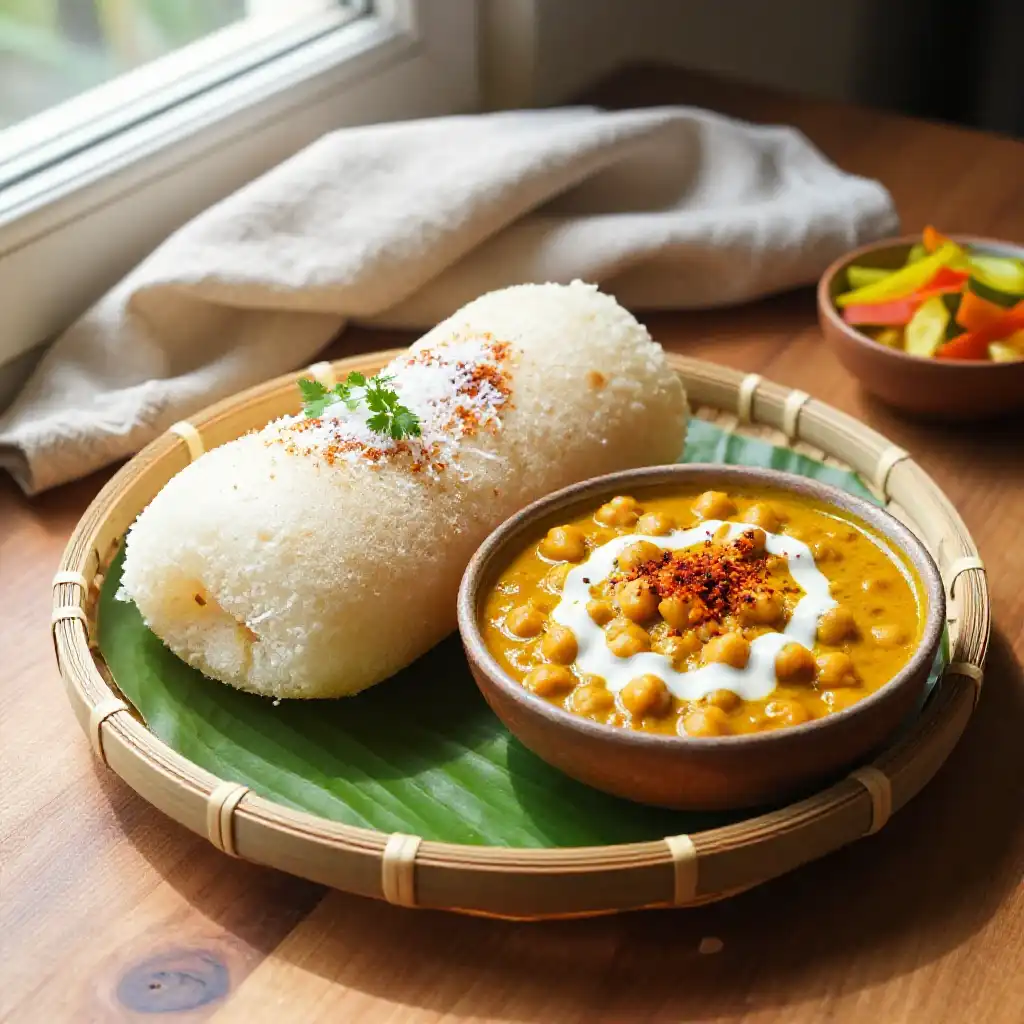
You take a cylinder of steamed, fluffy rice—warm as a hug and crumbling gently under your fork—and drag it through a chunky, golden pool of chickpeas. The steam rising from the puttu carries the scent of coconut and green chilies, while the curry offers up notes of cumin, turmeric, and something deep and roasted. It’s a textural rollercoaster: the soft, crumbly rice meets the creamy, yielding chickpeas and the occasional crunch of a fried shallot. It’s not just food; it’s an edible comfort blanket.
Why This Breakfast Will Ruin All Other Breakfasts for You
Let’s be honest, cereal is boring. Toast is a chore. But this? This is an event. The beauty of Kerala Puttu with Chickpea Curry lies in its perfect balance. It’s carb-heavy, sure, but it’s not heavy. The steam-cooking method for the puttu keeps it incredibly light, almost cloud-like. You can eat a generous portion and still feel energized, ready to conquer the day (or take a glorious nap, no judgment here).
Meanwhile, the chickpea curry, known locally as *Kadala*, is a masterclass in flavor extraction. Without relying on any heavy fats, it builds a complex, layered taste profile using just the right spices and a little bit of patience. It’s the kind of dish that tastes like it took all day to make, but comes together in under an hour. It’s wholesome, it’s hearty, and it’s a beautiful way to start your morning without needing three cups of coffee to wake up your taste buds.
The Secret Life of Roasted Rice Flour
You might think flour is just flour. You grab the bag, you make the dough, end of story. But for Puttu, the flour is the star, and it demands a little respect. The secret ingredient here isn’t an exotic spice or a rare herb—it’s the flour, and specifically, how it’s treated before it even touches the water.
This isn’t your standard, silky-smooth all-purpose flour. Traditional Kerala Puttu demands roasted rice flour. You start with raw rice (or a specific coarse rice flour), and you toast it in a dry pan until it changes color and releases a nutty, toasted aroma that fills your entire kitchen. You then grind it to a specific texture—it shouldn’t be powdery like confectioner’s sugar, but coarse, like fine sand. Why does this matter? That toasting process cooks the flour slightly, giving the finished puttu its characteristic crumbly texture. It prevents it from turning into a gummy, sticky brick. It’s the difference between a cloud and a doorstop. And the water you add to it? It’s not a free-for-all. It’s a slow, sprinkle-by-sprinkle process until the flour reaches the “crumble” stage—a texture that looks like moist sand and clumps together when you squeeze it, but falls apart easily.
Let’s Get Cooking: The Step-by-Step
Ready to turn your kitchen into a South Indian paradise? Don’t worry, you don’t need a fancy bamboo puttu maker immediately (though they are fun!). A simple steamer or even a pressure cooker works wonders. Here’s how we bring it all together.
First, let’s tackle the curry. It’s the soul of the dish.
1. **The Base:** Soak your chickpeas overnight. This is non-negotiable. Nobody likes a hard chickpea. Once they’re plump and ready, pressure cook them until they are tender but still hold their shape.
2. **The Grind:** While those are bubbling away, make a fine paste of grated coconut, cumin seeds, garlic, ginger, and a few green chilies. This is your flavor bomb. Don’t skimp on the coconut; it’s the creamy heart of the curry.
3. **The Tempering (Tadka):** In a deep pot, heat some coconut oil. Splutter some mustard seeds, curry leaves, and dried red chilies. The sizzle and the aroma are what make your neighbors peek over the fence.
4. **The Build:** Add sliced onions and sauté until they’re golden and sweet. Then, in go the turmeric and chili powder. Stir for a minute. Now, add the ground coconut paste and sauté until the raw smell disappears and the oil starts to separate at the edges.
5. **The Simmer:** Add the cooked chickpeas along with their water (or fresh water if needed). Add salt. Let it simmer for at least 15 minutes so the flavors marry. You’re looking for a thick, semi-gravy consistency. Finish with a squeeze of lime juice if you’re feeling zesty.
Now for the Pillowy Puttu.
1. **The Mix:** Take your roasted rice flour. Add salt. Now, using your hand, sprinkle in water little by little, mixing with your fingertips. Stop when the mixture looks like coarse breadcrumbs. Squeeze a handful—it should hold together, then crumble when you press it.
2. **The Steaming:** If you have a puttu kutti (that long tube), great! Fill the bottom with water. Layer the bottom with some grated coconut, then pack the flour in loosely. Top with more coconut. Steam for 5-7 minutes. If you’re using a steamer, just place the flour in a lightly oiled bowl or perforated vessel and steam.
3. **The Eject:** Gently push the hot cylinder out onto a plate. It should slide out smoothly, steaming and ready for action.
Common Pitfalls (Or, How to Avoid a Kitchen Disaster)
Even the best chefs have off days. Here are the top ways this dish fights back and how to win.
* **The Brick Wall:** Your puttu is hard, dense, and tastes like raw flour. **Why?** You added too much water. You drowned the flour. It should be barely damp. Remember the crumble test! Also, did you steam it long enough? Steam needs time to work its way through the flour.
* **The Mashed Potato:** Your puttu is a sticky, gummy blob. **Why?** You packed the flour into the steamer too tightly, or your flour is too fine. It needs air pockets to let the steam through. Be gentle, don’t compact it like you’re building a foundation.
* **The Bland Curry:** Your chickpea curry tastes like hot water. **Why?** You probably didn’t sauté the coconut paste long enough. That raw coconut taste needs to be cooked out until it’s fragrant. Also, don’t be shy with the salt. Legumes drink up salt like a sponge. And that final simmer? It’s mandatory. Let the flavors get to know each other.
Serving Vibes: Setting the Scene
This isn’t a dish you eat standing over the sink. This is a dish for lazy mornings, for sitting cross-legged on the floor with a big plate, for sharing. It’s the ultimate rainy day food. Imagine the sound of rain pattering against the window, a steaming stack of puttu on your plate, and a bowl of dark yellow, fragrant curry next to it. The warmth radiating from the plate chases away the chill.
It’s also a fantastic centerpiece for a weekend brunch with friends. It looks impressive but is surprisingly approachable. Serve it with a side of ripe banana slices—the sweetness is a perfect counterpoint to the spicy curry. And of course, a strong, sweet cup of South Indian filter coffee is the only acceptable way to wash it down. For those looking for something cool and refreshing, a look through some external inspirations like these smoothies and drinks might offer a perfect contrast.

Putting the “FAQ” in “Flavorful Answers”
You’ve got questions, I’ve got answers. Let’s clear up the mystery surrounding this South Indian treasure.
Can I freeze Kerala Puttu with Chickpea Curry?
This is a tricky one. The chickpea curry? Absolutely! It freezes beautifully. Make a huge batch, cool it completely, and portion it into freezer bags. It’ll keep for months. The puttu, however, is a different beast. It’s best eaten fresh. The texture of steamed rice flour changes upon freezing and reheating; it tends to get a bit hard and lose its delightful crumbliness. So, my advice: freeze the curry, make the puttu fresh.
How many calories are in Kerala Puttu with Chickpea Curry?
It’s a hearty breakfast, but it’s made of wholesome ingredients. A standard serving (one large puttu and a generous bowl of curry) typically lands around 400-500 calories. The main contributors are the rice flour and the coconut in the curry. But remember, this is “good” energy—it’s a slow-release carb bomb that will keep you full and focused for hours.
I don’t have a puttu maker. Can I still make this?
Yes, you absolutely can! Innovation is the mother of invention. You can use a steamer basket. Place your damp flour mixture in a heatproof bowl, perforated if you have it, and steam it. Alternatively, you can use a pressure cooker. Pour a cup of water into the cooker, place the flour in a steel tumbler or a small bowl, and place it on the trivet without the whistle. Steam for about 10 minutes. It won’t be a perfect cylinder, but it will taste exactly the same!
My curry is too watery/thick. Help!
A quick fix! If it’s too watery, let it simmer on the stove with the lid off for an extra 10-15 minutes. It will reduce and thicken naturally. If it’s too thick, just stir in a little hot water until you reach that perfect semi-gravy consistency. You’re in control.
Can I use regular wheat flour instead of rice flour?
You can, but you’ll be making something entirely different. The texture of wheat flour puttu is denser and chewier. It’s a valid dish in its own right (often called *Kappa Pidi*), but if you’re craving the authentic, crumbly lightness of traditional puttu, you really need to stick to roasted rice flour. For more quick and easy meal ideas, you can always check out my collection of recipes over at slapid.com/recipes//.
Kerala Puttu with Chickpea Curry

Ingredients
Ingredients
- 2 cups rice flour finely ground
- 1 cup water warm, for mixing
- 1 tsp salt
- 1 cup grated coconut fresh or frozen
- 1 cup chickpeas cooked or canned, drained
- 1 tbsp coconut oil
- 1 tsp mustard seeds
- 1 tsp cumin seeds
- 1 medium onion finely chopped
- 2 cloves garlic minced
- 1 tsp turmeric powder
- 1 tsp red chili powder
- 1 cup coconut milk thick