
Imagine waking up, rubbing the sleep from your eyes, and instead of the usual mud-thick coffee that tastes like a burnt radiator, you take a sip of pure, liquid emerald. We’re talking about a drink so vibrant it looks like it was plucked from a high-end Tokyo spa, but tastes like a creamy, tropical vacation.
The steam doesn’t rise from this one—instead, a frosty, velvet mist clings to the side of your glass. The first sip? It’s a revelation. It’s sweet, but not “sugar-crash” sweet. It’s earthy, but in a way that feels like a crisp morning walk through a moss-covered forest.
This isn’t your average “blended grass” health shake. This is the Kabusecha Green Tea Smoothie, and it’s about to become the best part of your morning routine.
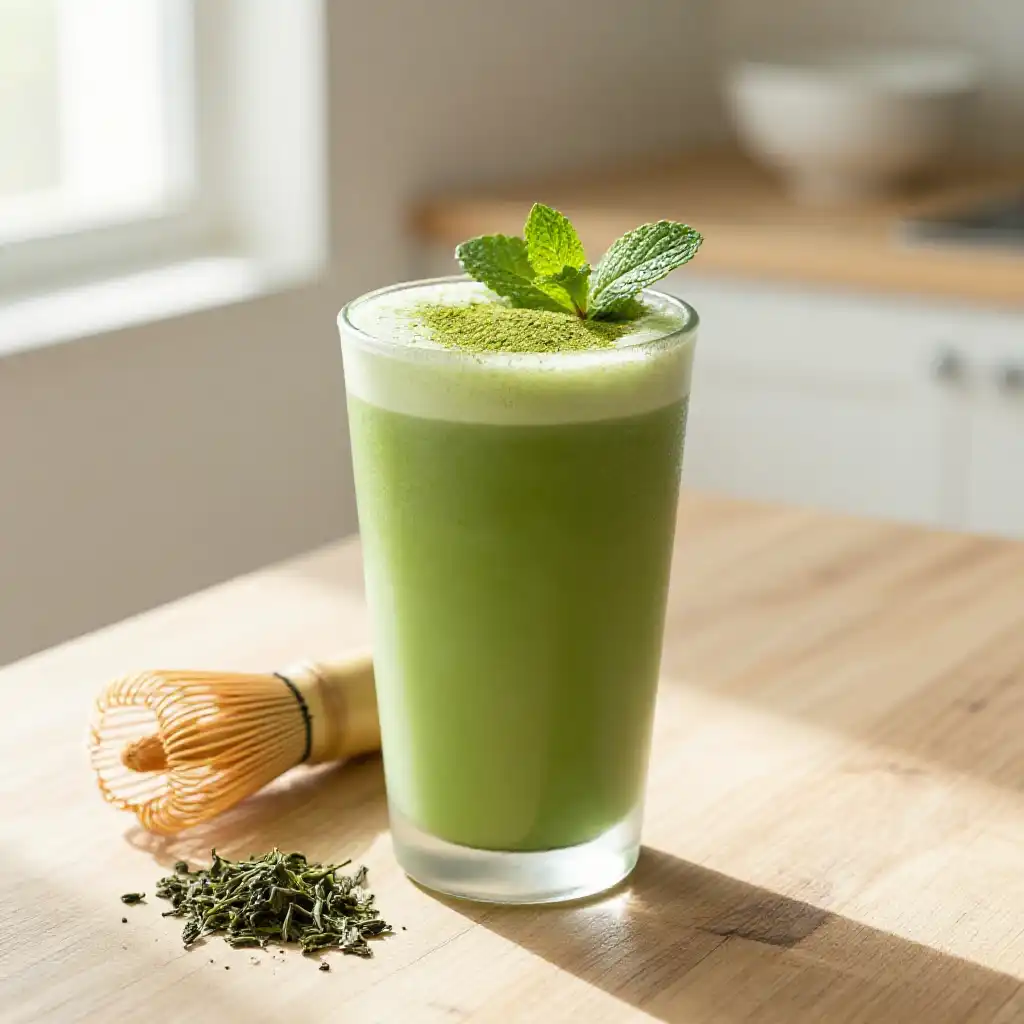
The Green Goddess You’ve Been Waiting For
Most green smoothies are, let’s be honest, a chore. You choke them down because you want the vitamins, but you’re secretly dreaming of a donut. This recipe flips the script entirely.
By using premium Japanese Kabusecha tea, we are tapping into a flavor profile that most people haven’t even discovered yet. It’s the “middle child” of the tea world—sitting comfortably between the everyday punch of Sencha and the regal, intense depth of Gyokuro.
When you blend this shaded tea with frozen tropical fruits and a splash of creamy coconut milk, something magical happens. The tea’s natural umami cuts through the fruit’s sweetness, creating a balance that is sophisticated, refreshing, and dangerously addictive.
Check out our other beverage masterpieces to see how we’re redefining the blender game one sip at a time.
The Shady Science of Kabusecha
Why Kabusecha? Why not just toss in a tea bag from the back of the pantry? Well, because we have standards, darling!
Kabusecha literally means “covered tea.” About a week or two before the tea leaves are harvested, the farmers throw a specialized shade cloth over the bushes. This isn’t just to keep them cool; it’s a strategic move to stress the plant.
When the tea grows in the dark, it pumps out massive amounts of chlorophyll to compensate for the lack of sun. This results in that neon-green color that looks like it’s glowing.
Even better? The shade prevents the tea’s L-theanine (the stuff that makes you feel calm) from turning into tannins. The result is a tea that is high in caffeine but incredibly low in bitterness. It’s all the energy without the “jitters” or the “pucker face.”
If you love experimenting with unique textures and flavors, you might also enjoy our guide on mastering Japanese-fusion desserts.
The Flavor Makers (Raid the Pantry!)
To make the ultimate Kabusecha Green Tea Smoothie, you need ingredients that respect the tea. Here is your grocery list:
- Kabusecha Tea Leaves: 1.5 teaspoons (high-quality loose leaf is non-negotiable).
- Frozen Mango or Pineapple: This provides the “ice cream” texture without the dairy.
- Creamy Coconut Milk: Use the stuff from the carton for a light vibe, or the can for a decadent treat.
- A Squeeze of Lime: To make those green flavors pop.
- Honey or Agave: Just a touch to bridge the gap between earthy and sweet.

The Step-By-Step: How to Make Kabusecha Green Tea Smoothie
First things first: Do not use boiling water. If you pour boiling water over Kabusecha, you’ll burn the delicate leaves and end up with a drink that tastes like a lawnmower’s bag.
1. The Cold Steep: For the best flavor, steep your tea leaves in room-temperature filtered water for about 10 minutes. This draws out the sweetness and keeps the color vibrant.
2. The Deep Freeze: Make sure your fruit is rock-solid. A room-temperature mango will give you a “green soup.” We want a “frosty swirl.”
3. The Blitz: Combine your tea (strained), frozen fruit, coconut milk, and lime juice in a high-speed blender. Start low, then crank it up to high until you see a vortex of emerald green.
4. The Taste Test: Give it a swirl. Does it need more honey? A bit more lime? This is your masterpiece—adjust it!
Don’t Mess This Up: Common Pitfalls
Look, I want you to succeed. But I’ve seen some things in the kitchen that would make a tea master weep.
Mistake #1: Using stale tea. If your tea leaves have been sitting in a tin since the last decade, they’ve lost their magic. Use fresh, vacuum-sealed Kabusecha.
Mistake #2: Over-diluting. Don’t add ice cubes! Ice cubes are the enemy of flavor. They water down the richness. Use more frozen fruit if you want it thicker.
Mistake #3: Walking away. This smoothie is at its peak the second it leaves the blender. Don’t let it sit on the counter while you check your emails. Drink it while it’s frosty!
Serving Vibes & Morning Rituals
This isn’t a “chug it in the car” kind of drink, though you certainly could. This is a “sit on the porch and watch the sunrise” kind of drink.
Serve it in a tall, chilled glass. If you’re feeling fancy (and you should be), sprinkle a little bit of the dry tea leaves on top or a dusting of matcha powder for that extra “wow” factor.
It’s the perfect companion for a post-yoga cool-down or a mid-morning brain boost when you’re staring at a blank screen. It’s clean, it’s sharp, and it makes you feel like you actually have your life together.
Everything You’re Dying to Ask
How to freeze Kabusecha Green Tea Smoothie?
If you’ve made a giant batch, don’t let it go to waste! Pour the smoothie into silicone ice cube trays and freeze them. When you’re ready for round two, just toss the “smoothie cubes” back into the blender with a splash of coconut water. Easy easy Kabusecha Green Tea Smoothie on demand!
Calories in Kabusecha Green Tea Smoothie?
A standard serving (about 12 oz) usually clocks in between 180 to 240 calories, depending on how much honey or coconut milk you use. It’s a nutrient-dense way to power through your morning without the heavy calories of a milkshake.
Can I use Matcha instead of Kabusecha?
You can, but the flavor will change. Matcha is much more intense and “grassy.” Kabusecha offers a more nuanced, floral, and sweet experience that plays better with tropical fruits.
How long does the tea need to steep?
For this smoothie, a 5-10 minute room-temperature steep is the sweet spot. If you’re in a rush, you can use warm water (around 160°F), but let it cool before blending so it doesn’t melt your frozen fruit!
Now, go forth and blend. Your taste buds—and your energy levels—will thank you. Don’t forget to check out our latest recipe collections for more flavor inspiration!
Kabusecha Green Tea Smoothie

Ingredients
Ingredients
- 2 tsp Kabusecha loose leaf tea ground into a fine powder or steeped in 1/4 cup hot water
- 1.5 cups Frozen mango chunks provides natural sweetness and creaminess
- 1 cup Baby spinach fresh and packed
- 0.5 cup Coconut milk unsweetened, from a carton
- 0.5 cup Greek yogurt plain and unsweetened
- 1 tbsp Honey or maple syrup for vegan option
- 0.5 tsp Fresh ginger grated
- 0.25 cup Ice cubes optional for extra frostiness