
The Crispy, Golden Ticket to Breakfast Bliss
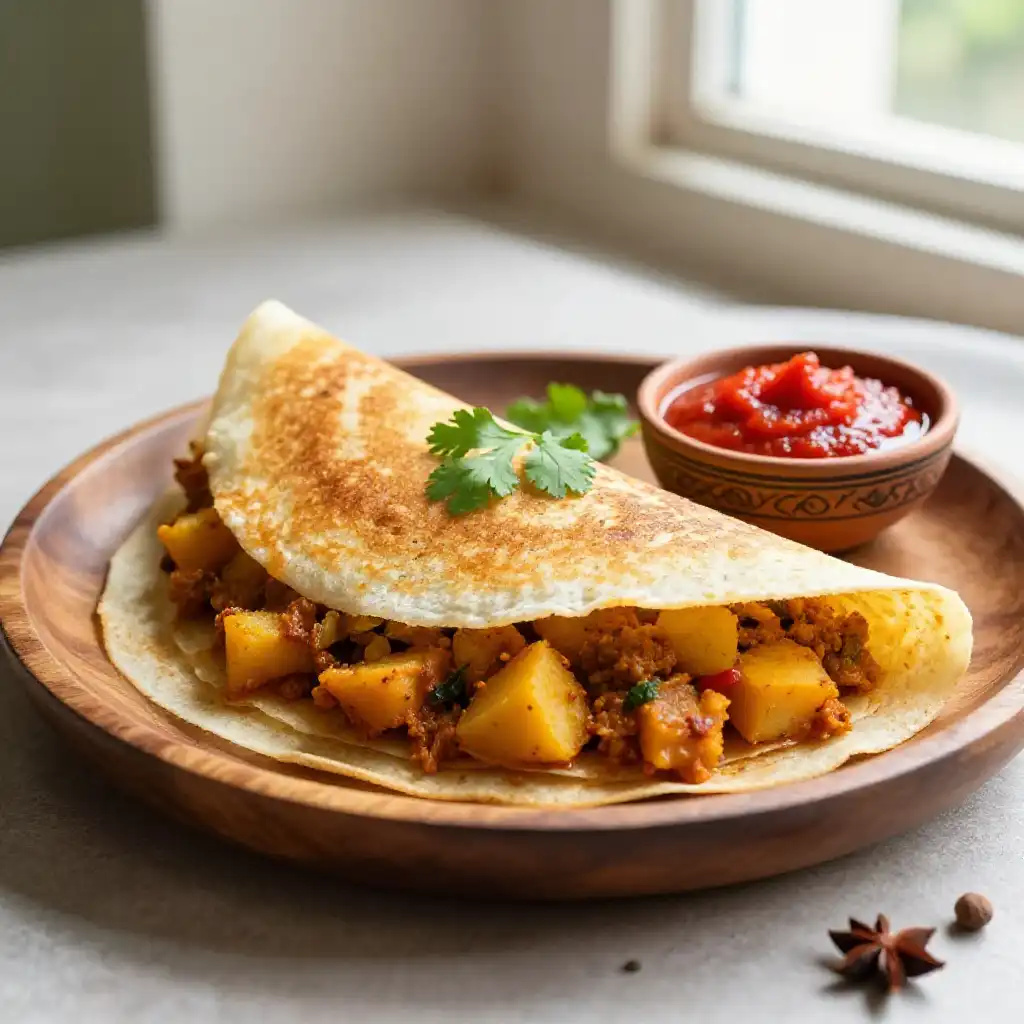
There’s a certain magic that happens when a ladle of batter hits a hot griddle. It doesn’t just sizzle; it sings. It spreads in a perfect, paper-thin circle, bubbling into a lacy, golden canvas that smells faintly of earth and sunshine. That, my friends, is the sound of a Dosa being born. And when you fold that crispy crepe around a warm, cloud-soft potato filling spiked with ginger, mustard seeds, and a gentle hum of chili? That’s not just breakfast; that’s a full-blown morning symphony. It’s the kind of dish that makes you forget you even own a toaster. Forget bland cereal; we’re about to embark on a culinary adventure that will make your taste buds stand up and applaud.
Why This Is Your New Kitchen Obsession
Let’s be real. We’re all chasing that perfect textural contrast, the culinary equivalent of a great pop song with a killer bridge. This recipe delivers it in spades. You get the shatteringly crisp, almost paper-like shell of the dosa, which gives way to the most comforting, flavorful mashed potato mixture you’ve ever had. It’s a handheld meal, a flavor bomb, and a conversation starter all rolled into one.
But the real beauty of mastering the Indian Dosa with Potato Masala Filling is the sheer versatility. This isn’t a one-trick pony. The batter is your blank slate, and the filling is your muse. It’s a recipe that feels incredibly impressive but is secretly straightforward once you get the hang of it. It’s the kind of dish that turns a regular Tuesday into a “remember that time we made dosas?” memory. If you’re looking to expand your breakfast horizons beyond the usual, this is where you start. It’s a whole new world of flavor, and I’ve got the map.
The Soul of the Dish: A Little Fermentation Magic
The secret to an authentic, tangy, and light-as-air dosa isn’t in some fancy technique; it’s all about the ancient alchemy of fermentation. This isn’t just about making the batter rise; it’s about waking it up. You’re creating a bustling metropolis of microscopic powerhouses (hello, lactobacilli!) that go to work on the rice and lentils.
Here’s the science bit, made simple: these little microbes feast on the natural starches in the batter, producing carbon dioxide (which creates those delightful air pockets for a light, lacy texture) and lactic acid. That lactic acid is the hero here, gifting the dosa its signature, gentle tang that cuts through the richness of the potato filling. It’s this tangy complexity that separates a truly great dosa from a flat, boring pancake. This fermentation process also makes all those wonderful nutrients in the lentils and rice easier for your body to absorb. So, you’re not just making something delicious; you’re creating a powerhouse of flavor and nutrition.
Common Kitchen Catastrophes (And How to Dodge Them)
Even the most seasoned chefs can have a dosa disaster. But don’t you worry. Here are the top pitfalls and your surefire ways to avoid them.
The Batter Blues
Your batter is too thick? You’ll be fighting with it, trying to spread it, and it will tear. It’s more like a thick crepe than a delicate dosa. If it’s too thin, it will be a watery mess that won’t crisp up. The consistency is key: think of a beautiful, pourable pancake batter, just a touch thicker than heavy cream. When you tilt the pan, it should spread on its own, just a little. And patience, my friend! Don’t rush the fermentation. A warm spot is its happy place. If your kitchen is chilly, give it a cozy spot in your oven with the light on. Let it do its thing until it’s bubbly and has a pleasant, sour aroma.
The Filling Fiasco
The potato masala is the heart of this dish, but a watery filling is its worst enemy. It will turn your crispy dosa into a soggy, sad mess in seconds. The fix is simple: cook your potatoes until just fork-tender, then mash them. Don’t use a food processor, or you’ll get a gluey paste. A good old potato masher or even just a fork is your best friend here. You want a rustic, slightly chunky texture. And make sure your final masala mixture isn’t leaking any liquid before you spoon it onto that golden crepe.
Serving Up Some Serious Vibes
So, what’s the perfect scene for a plate of piping hot dosas? This is the ultimate rainy day rescue food. Imagine this: outside, the sky is grey and pouring, but inside, your kitchen is warm and steamy. The sizzle of the dosa on the griddle is your personal soundtrack, and the aroma of mustard seeds popping in hot oil is your scented candle. This is comfort, personified.
But it’s also a party dish! These are fantastic for a brunch spread. Set up a dosa station and let your guests build their own. It’s interactive, fun, and a guaranteed showstopper. Think of it as the South Indian answer to the taco bar. And if you’re looking for the perfect liquid companion, check out some of our favorite **smoothies and drinks** over at Indixer. A fresh, fruity mango lassi or a simple, spicy ginger tea are the perfect foils for the savory dosa. And for more culinary inspiration to fill your recipe book, don’t forget to explore the treasure trove of ideas on our main site at slapid.com. This dish is all about joy and connection.

Let’s Get Cooking: The Step-by-Step
Alright, apron on? Let’s do this.
What You Need to Raid From the Pantry
**For the Dosa Batter (makes about 10-12 dosas):**
– 2 cups Parboiled Rice (this is key for the authentic texture and color!)
– 1/2 cup Urad Dal (skinned black lentils)
– 1/4 teaspoon Fenugreek Seeds (our secret weapon for great fermentation)
– Salt, to taste
– A little oil, for cooking
**For the Masala Filling:**
– 3 medium potatoes, boiled, peeled, and roughly mashed
– 1 tablespoon coconut oil (or any neutral oil)
– 1 teaspoon black mustard seeds
– 1 teaspoon cumin seeds
– 1/2 teaspoon turmeric powder
– 1/2 teaspoon asafoetida (hing)
– 1 small onion, finely chopped
– 1 green chili, finely chopped (optional, for heat)
– A 1-inch piece of ginger, grated
– A handful of fresh cilantro, chopped
– Salt, to taste
The Step-by-Step Magic
1. **The First Soak:** Rinse the rice, urad dal, and fenugreek seeds together. Cover with plenty of water and let them soak for at least 6 hours, or overnight. This is the first step to tenderness.
2. **The Grind:** Drain the soaked ingredients and add them to a blender. Add a little fresh water at a time and grind until you have a smooth, thick batter. It should be like a thick pancake batter. Pour into a large bowl, cover, and let it ferment in a warm place for 8-12 hours. It should rise, become bubbly, and smell pleasantly sour.
3. **Make the Masala:** Heat the oil in a pan over medium heat. Add the mustard seeds and let them pop and sizzle. Toss in the cumin seeds, asafoetida, and green chili. Sauté for 30 seconds until fragrant.
4. **Build the Flavor:** Add the chopped onion and grated ginger. Cook until the onion turns soft and translucent. Now, add the turmeric powder and salt, stirring for another minute.
5. **The Potato Payoff:** Add the mashed potatoes to the pan. Mix everything together thoroughly, mashing any large potato chunks. You want a cohesive, flavorful mixture. Turn off the heat and stir in the fresh cilantro. Set aside.
6. **Time to Dosa!** Heat a non-stick skillet or a cast-iron griddle over medium-high heat. To test if it’s ready, splash a tiny drop of water on it. If it sizzles and evaporates instantly, you’re good to go. Lightly grease the pan with a paper towel dipped in oil.
7. **The Pour and Spread:** Pour a ladleful of batter in the center of the hot griddle. Immediately, using the back of the ladle, spread the batter in a quick, circular motion from the center outwards to form a thin, even crepe.
8. **The Sizzle and Crisp:** Drizzle a tiny bit of oil around the edges. Let it cook for about 2 minutes. You’ll see the underside turn golden brown and lacy, and bubbles will start to form on the top surface.
9. **The Fill and Fold:** Spoon a generous line of the potato masala filling down the center of the dosa. Let it cook for another 30 seconds. Now, with a spatula, gently fold one side of the dosa over the filling, and then fold the other side over it, creating a beautiful, filled roll.
10. **Serve Immediately:** Slide it onto a plate and serve hot with your favorite chutney or sambar. Don’t wait! The crispness is fleeting.
Leftovers? Here’s the Plan
If you somehow manage to have any dosa batter left, fantastic! It keeps in the fridge for up to 3 days. It will get more sour the longer it sits, which is a delicious bonus. The potato filling also stores beautifully in an airtight container in the fridge for 2-3 days. The real question is, can you freeze the finished dosas?
Your Dosa Questions, Answered!
Can I freeze the cooked dosas?
Yes, but with a trick! The best way to freeze Indian Dosa with Potato Masala Filling is to cook the dosas completely but STOP before you fold them. Let them cool, then stack them with parchment paper in between. Wrap the stack tightly in plastic wrap and then foil. Freeze for up to a month. To reheat, pop them in a hot, dry skillet for a minute on each side. They won’t be *as* crispy as fresh, but they’ll be darn close!
How many calories are in an Indian Dosa with Potato Masala Filling?
This can vary greatly depending on the amount of oil you use and the size of your dosa. Generally, one medium-sized, moderately oiled dosa with filling can range from **250 to 400 calories**. It’s a fantastic source of complex carbs and plant-based protein, so it’s a pretty balanced and satisfying meal!
My batter isn’t fermenting. What am I doing wrong?
Don’t panic! Fermentation is a fickle friend. The most common culprits are a temperature that’s too low. Try placing your bowl of batter in your oven with just the oven light on—it creates the perfect cozy, warm environment. Also, ensure you used parboiled rice and urad dal with the skins removed, as these are essential for a good rise.
Is it possible to make this without a traditional griddle?
Absolutely! While a cast-iron *tawa* is traditional, a good quality non-stick skillet is a fantastic and easy substitute. The key is to make sure it gets properly hot before you start spreading the batter.
I don’t have a blender. Can I use a store-bought batter?
Of course! Many Indian grocery stores sell pre-made dosa batter. This is a fantastic shortcut for busy mornings. Just give the batter a good stir before you use it, and you’re ready to go straight to the cooking and filling steps. It’s all about making this work for you and your kitchen.
Indian Dosa with Potato Masala Filling

Ingredients
Ingredients
- 2 cups Parboiled Rice Soaked for 4 hours
- 0.5 cups Urad Dal (Split Black Lentils) Soaked for 4 hours
- 0.5 tsp Fenugreek Seeds Optional for fermentation
- 1 tsp Salt Adjust to taste
- 3 medium Potatoes Boiled and mashed
- 2 tbsp Vegetable Oil Divided for cooking
- 1 tsp Mustard Seeds For tempering
- 1 tsp Cumin Seeds For tempering
- 2 whole Green Chilies Finely chopped
- 1 inch Ginger Minced
- 10 leaves Curry Leaves Fresh
- 1 pinch Asafoetida (Hing) Digestive aid