There’s a specific kind of magic that happens in a Moroccan kitchen just after sunrise. It’s the smell of butter melting into warm honey, the gentle sizzle of batter hitting a hot pan, and the aroma of orange blossom water drifting through the air. It’s the scent of Moroccan Baghrir Semolina Pancakes with Honey, a breakfast that feels less like a meal and more like a warm, edible hug. If you’ve never experienced the joy of a pancake that requires zero flipping and soaks up syrup like a dream, you, my friend, are in for a life-changing treat.
The ‘Thousand Holes’ Miracle (And Why You Need It in Your Life)
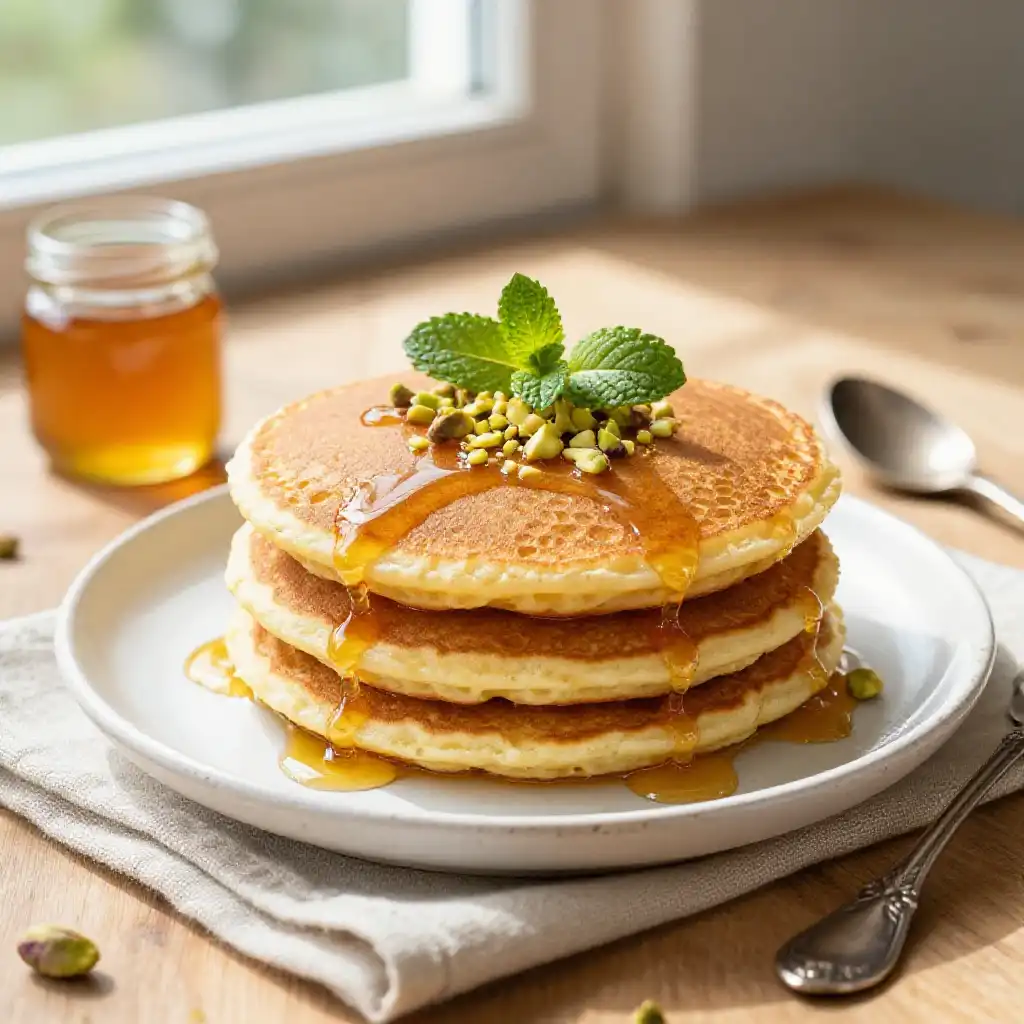
Let’s be real for a second. Most pancakes demand your undivided attention. You’re standing over a griddle, spatula in hand, watching for bubbles, waiting for that perfect moment to flip. It’s a commitment. Baghrir says, “Nah, let’s relax.” This is the ultimate lazy-genius breakfast. You whisk, you pour, you wait. The pancake cooks itself on one side, developing a web of tiny bubbles that look like a honeycomb. It’s porous, spongy, and light as a cloud. Once you pour that molten butter and honey mixture over the top, it doesn’t just sit there. It plunges into every single one of those little holes, ensuring that every bite is a perfect ratio of soft pancake to sweet, sticky glaze. It’s a texture you can’t replicate with any other breakfast food. It’s the kind of dish that makes you close your eyes and say “wow” without meaning to.
Recommended Product
 -40%
-40%
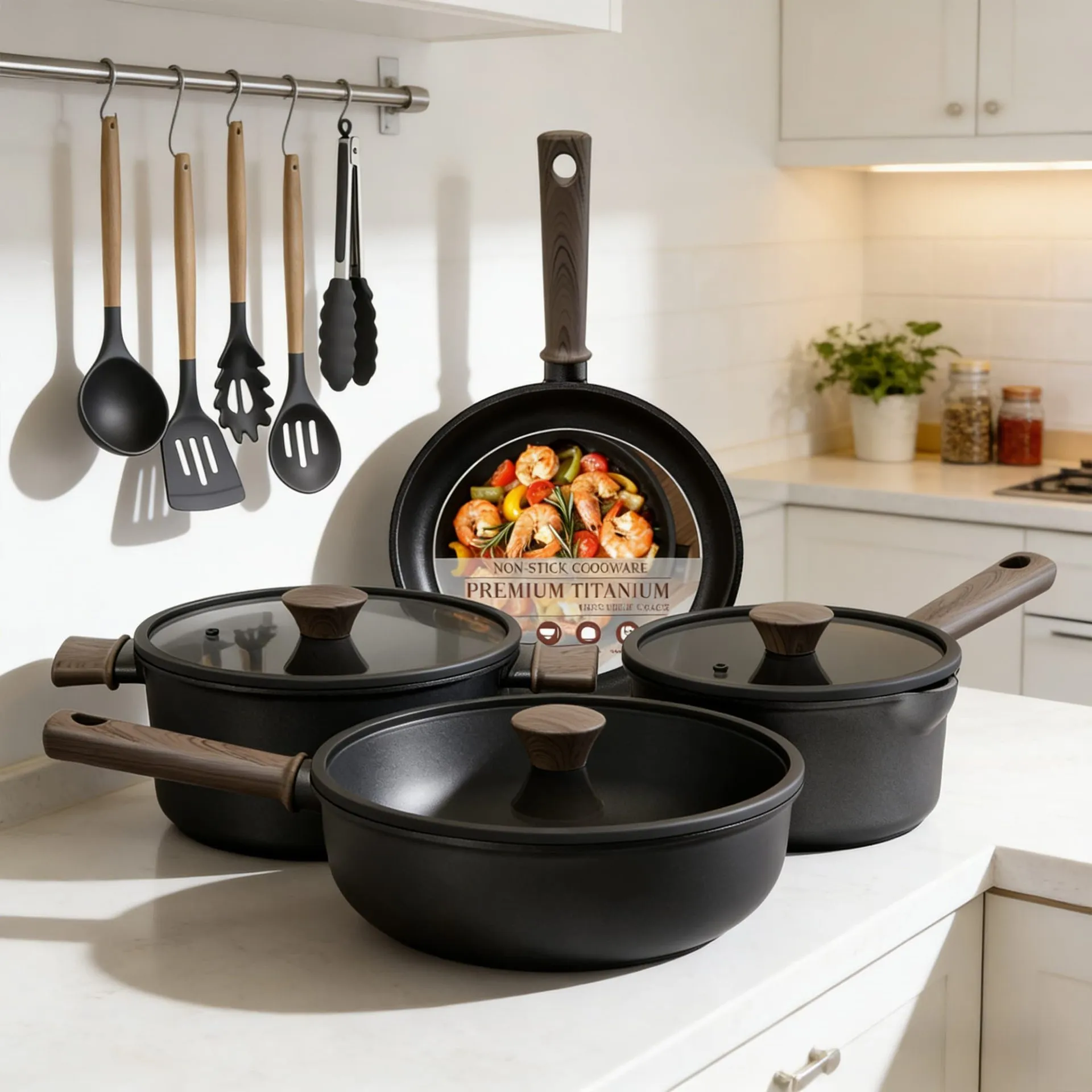
Astercook 21‑Piece Non‑Stick Ceramic Cookware Set with Detachable Handles
- Pieces →: 21‑piece set with pots, pans, lids & accessories
- Handles →: Secure removable/detachable handle system for space saving & oven use
- Non‑Stick Coating →: Premium ceramic non‑stick free of harmful PFOA chemicals for healthier cooking
- Cleanup →: Easy to clean thanks to non‑stick surface and detachable handles
The Secret Life of Semolina: The Grain That Wants to Be a Sponge
Why is this pancake so different from its fluffy, buttermilk-based cousins? The answer lies in its soul: fine semolina flour. This isn’t your soft, powdery all-purpose stuff. Semolina is made from durum wheat, and it has a slightly coarser texture and a golden hue. It’s the same stuff that gives pasta its al dente bite, but when hydrated and cooked gently, it transforms. Here’s the science-y bit that makes you the hero of your kitchen: semolina absorbs liquid like nobody’s business. When it hits the warm pan, the starches on the surface gelatinize quickly, trapping steam inside. That steam rushes for the exit, punching holes through the batter and creating that signature “thousand holes” texture. It’s not just a pancake; it’s an edible sponge designed by culinary geniius to soak up every last drop of buttery, honeyed goodness. Without semolina, you just have a sad, flat crepe. With it? You have magic.
🍳 Used in this recipe
Get It on Amazon Basics✔ Free Delivery | ✔ Top Rated | ✔ Budget-Friendly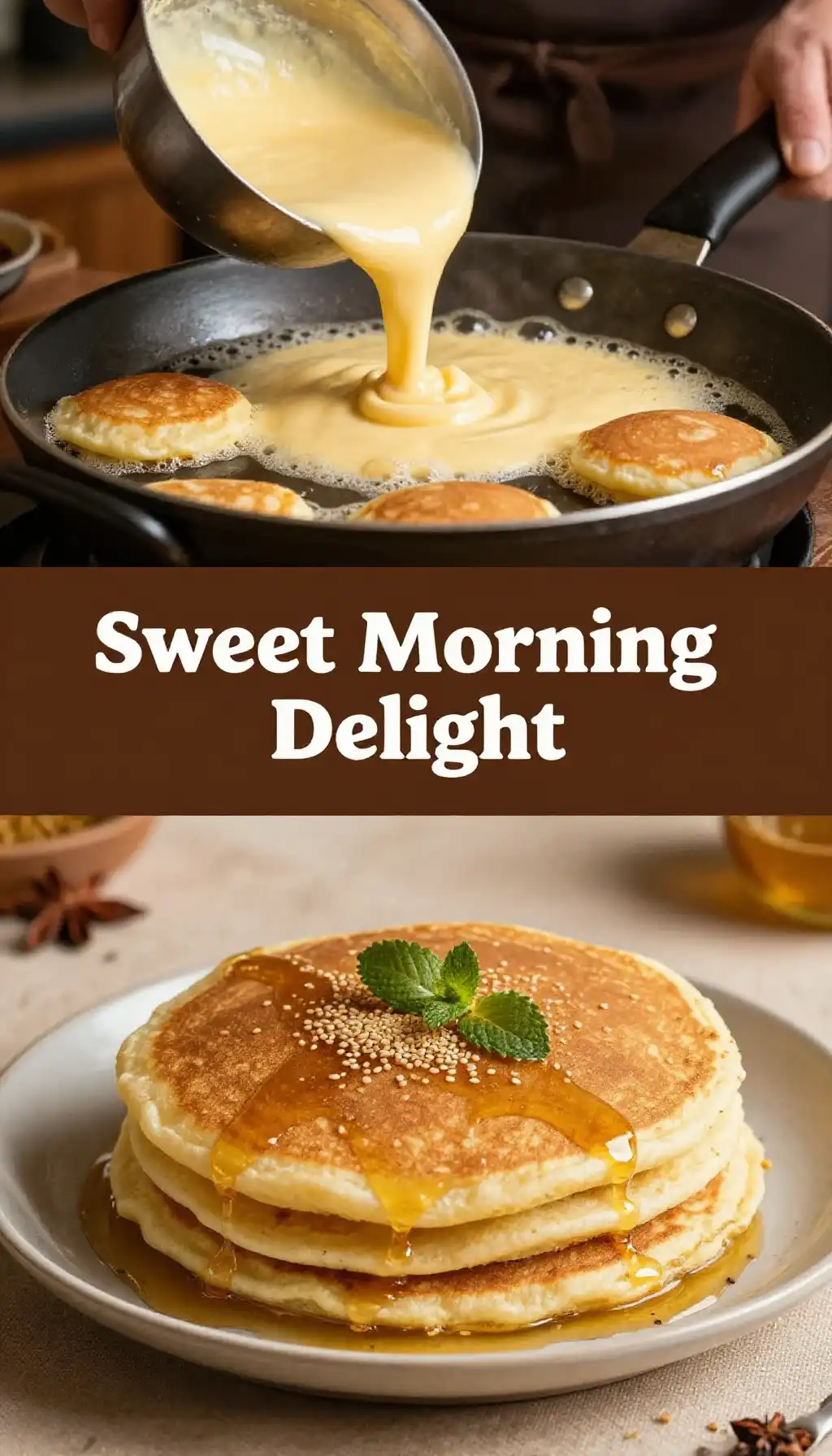
How to Make Moroccan Baghrir Semolina Pancakes with Honey (Without the Flipping Frenzy)
Ready to dive in? This is where the fun begins. The process is simple, but a few key details separate the “good” from the “unforgettable.” We’re aiming for unforgettable.
What You Need to Raid From the Pantry
You don’t need a treasure chest of ingredients for this. The beauty of this recipe is its simplicity. You’ll need fine semolina, a bit of all-purpose flour for balance, a pinch of salt, sugar for those lovely caramelized edges, and baking powder for the lift. For the liquid, it’s warm water and a splash of milk. The real flavor players here are the yeast (which helps with the bubbly texture) and a touch of orange blossom water. If you can’t find orange blossom water, don’t panic! A little vanilla extract will still give you a delicious result, but if you see that little bottle of floral magic, grab it. It’s the scent of a Moroccan morning.
The Step-by-Step: Let’s Get Cooking
First, we wake up the yeast. Dissolve it with the sugar in warm water and let it sit for a few minutes until it gets foamy and fragrant. This is your assurance that the bubbles are coming. In a separate bowl, whisk your dry ingredients—semolina, flour, salt, and baking powder. Pour in the yeasty water, the milk, and the orange blossom water. Now, whisk. And whisk. And whisk some more. You’re not just combining, you’re aerating. You want a batter that resembles a thin pancake batter or heavy cream. It should be smooth, with no lumps in sight.
🍳 Used in this recipe
Get It on Amazon Basics✔ Free Delivery | ✔ Top Rated | ✔ Budget-FriendlyHere comes the most important part: let the batter rest. Walk away for at least 15-20 minutes. Go water your plants, check your emails, do a little dance. This resting period is non-negotiable. It allows the semolina to fully hydrate and the yeast to work its magic, which is the secret to those signature holes. While you wait, heat a non-stick skillet or crepe pan over medium heat. You don’t need oil or butter for the first pancake! Once the pan is warm, give it a quick wipe with a paper towel just to be sure it’s clean and dry.
Pour about a ladleful of batter into the center of the pan. Don’t spread it. Just let it settle. Watch the magic happen. Within a minute, the surface will erupt in a constellation of bubbles, like a fizzy, edible lava lamp. The top will look like a honeycomb, and the edges will start to dry out. This is your sign. The bottom is a beautiful pale gold, and the top is set. You don’t flip it! You simply slide it onto a plate. It’s cooked through from the steam trapped by those holes. Repeat the process, and in no time, you’ll have a beautiful stack of these golden wonders. If your pan starts sticking, you can very lightly oil it, but a good non-stick surface is your best friend here.
Common Pitfalls: How NOT to Mess Up Your Baghrir
Even simple recipes have their quirks. Here are the top ways people go wrong and how you, the savvy cook, will avoid them.
🍳 Used in this recipe
Get It on Amazon Basics✔ Free Delivery | ✔ Top Rated | ✔ Budget-Friendly- The “Sad, Solid Pancake”: If you pour your batter and nothing happens. No bubbles, no holes, just a silent, sad circle in the pan. This usually means your yeast wasn’t active, your batter was too cold, or you didn’t let it rest long enough. Make sure your water is “Goldilocks warm” (not hot, not cold), and give that batter the time it needs to think about its life choices and bubble up.
- The “Sticky Situation”: If your pancake is welded to the pan, your heat is too high, or you’re using too much oil. Baghrir likes a medium, consistent heat. It’s a gentle creature. It shouldn’t be sizzling aggressively. And remember, the first one is often a test to gauge the pan’s temperature.
- The “Flavor Fade”: If your pancakes taste a bit… blah. You might have skimped on the salt (it’s a tiny amount but crucial for balancing the sweetness) or the orange blossom water. Don’t be shy with the flavor enhancers!
Serving Vibes: Setting the Scene for a Perfect Morning
Baghrir is not a dish you eat standing up. It’s a “slow down and savor” kind of meal. The best time for Baghrir is on a lazy weekend morning when the sun is streaming through the window and you have nowhere to be. The vibe is cozy. Pile the warm pancakes high on a platter and place it in the center of the table like a centerpiece. The real ritual is the finishing touch: a generous knob of butter melting into a pool of warm honey (often infused with a cinnamon stick or orange zest) right before you eat. Pour yourself a steaming glass of sweet mint tea, perhaps check out some other inspiring drink ideas for your morning routine, and invite everyone to pull up a chair. It’s a communal dish, meant for sharing and tearing apart with your hands, dipping and dunking until every last crumb is gone.
Leftovers? Here’s the Plan
Let’s be honest, fresh is best. But life happens. If you find yourself with extra Baghrir, here’s how to keep the magic alive. Once the pancakes have cooled completely, stack them with a tiny square of parchment paper between each one to prevent them from sticking together too much. Pop them in a zip-top bag or an airtight container. They’ll keep in the fridge for up to 3 days. To reheat, a quick trip to the toaster or a warm skillet for 30 seconds per side will bring them right back to their soft, pliable selves. Avoid the microwave if you can—it tends to make them rubbery.
Baghrir FAQ: Your Questions, Answered
Got questions? I’ve got answers. This is the stuff they don’t always tell you.
🍳 Used in this recipe
Get It on Amazon Basics✔ Free Delivery | ✔ Top Rated | ✔ Budget-FriendlyWhy didn’t my Baghrir get the “thousand holes”?
Ah, the classic hole dilemma. The three culprits are almost always: 1) Your yeast was old or the water was too hot/cold, so it didn’t activate properly. 2) You didn’t let the batter rest long enough for the gluten to relax and the yeast to party. 3) Your pan wasn’t hot enough. The heat is what kicks off the steam-making process.
Can I freeze Moroccan Baghrir Semolina Pancakes with Honey?
Absolutely! This is the best way to meal-prep this breakfast. Let the pancakes cool completely, then stack them with parchment paper in between. Place the stack in a freezer-safe bag, squeezing out as much air as possible. They’ll be happy in the freezer for up to 3 months. To thaw, just leave them on the counter for a bit or pop them straight into the toaster or a warm pan.
What are the calories in Moroccan Baghrir Semolina Pancakes with Honey?
This depends entirely on how generous you are with the honey-butter glaze (and let’s be real, you should be generous). A single plain pancake is surprisingly light, usually around 80-100 calories. However, the magic happens in the topping. A tablespoon of honey adds about 60 calories and a tablespoon of butter adds about 100. So, a serving of two pancakes with a good drizzle is a satisfying, energy-boosting treat that’s well worth it. Think of it as fuel for a great day!
🍳 Used in this recipe
Get It on Amazon Basics✔ Free Delivery | ✔ Top Rated | ✔ Budget-FriendlyMy batter looks too thick/thin. Is that okay?
It’s all about the consistency. Your batter should be like a thin crepe batter or heavy cream. If it’s thick like traditional American pancake batter, it won’t bubble properly. Add a splash more water. If it’s watery and runs everywhere, add a tiny bit more semolina. Whisk well after every adjustment.
Can I make this without the orange blossom water?
You can, but you’ll miss that distinctive floral note. If you omit it, the pancakes will still be delicious, just more neutral. A great substitute is a splash of vanilla extract or even a tiny pinch of ground cinnamon in the batter. The goal is to add a hint of warmth and complexity.
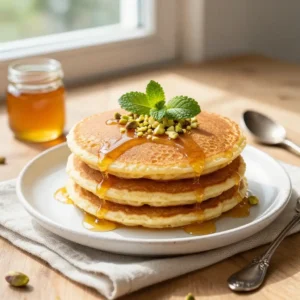
Moroccan Baghrir Semolina Pancakes with Honey

Ingredients
Ingredients
- 1 cup fine semolina flour also known as durum wheat semolina
- 1 cup all-purpose flour
- 1 tsp instant yeast or active dry yeast, proofed first
- 1 tsp sugar
- 1 tsp salt
- 2 cups warm water about 110°F (43°C)
- 2 tbsp unsalted butter melted, plus more for cooking
- 1 cup honey for serving
- 1 tbsp unsalted butter melted, for serving
Notes
🍳 Used in this recipe
Get It on Amazon Basics✔ Free Delivery | ✔ Top Rated | ✔ Budget-Friendly