The Scent of Holidays Past
I remember the first time I truly *smelled* a panettone. It wasn’t in a fancy bakery, but in a bustling, steamy kitchen where a towering, golden dome was cooling on a rack. The air was thick with the scent of sweet, yeasty bread mingling with bright bursts of orange and lemon, a whisper of warm vanilla, and the gentle, earthy perfume of plump, rum-soaked raisins. It was a hug for the senses before I even took a bite. That first tear of the impossibly tender, cloud-like crumb? Pure magic. This isn’t just a bread; it’s a holiday heirloom, a edible centerpiece that tastes like celebration. And I’m going to show you how to bring that magic right into your own kitchen. No passport required.
Why This Panettone Will Steal the Show
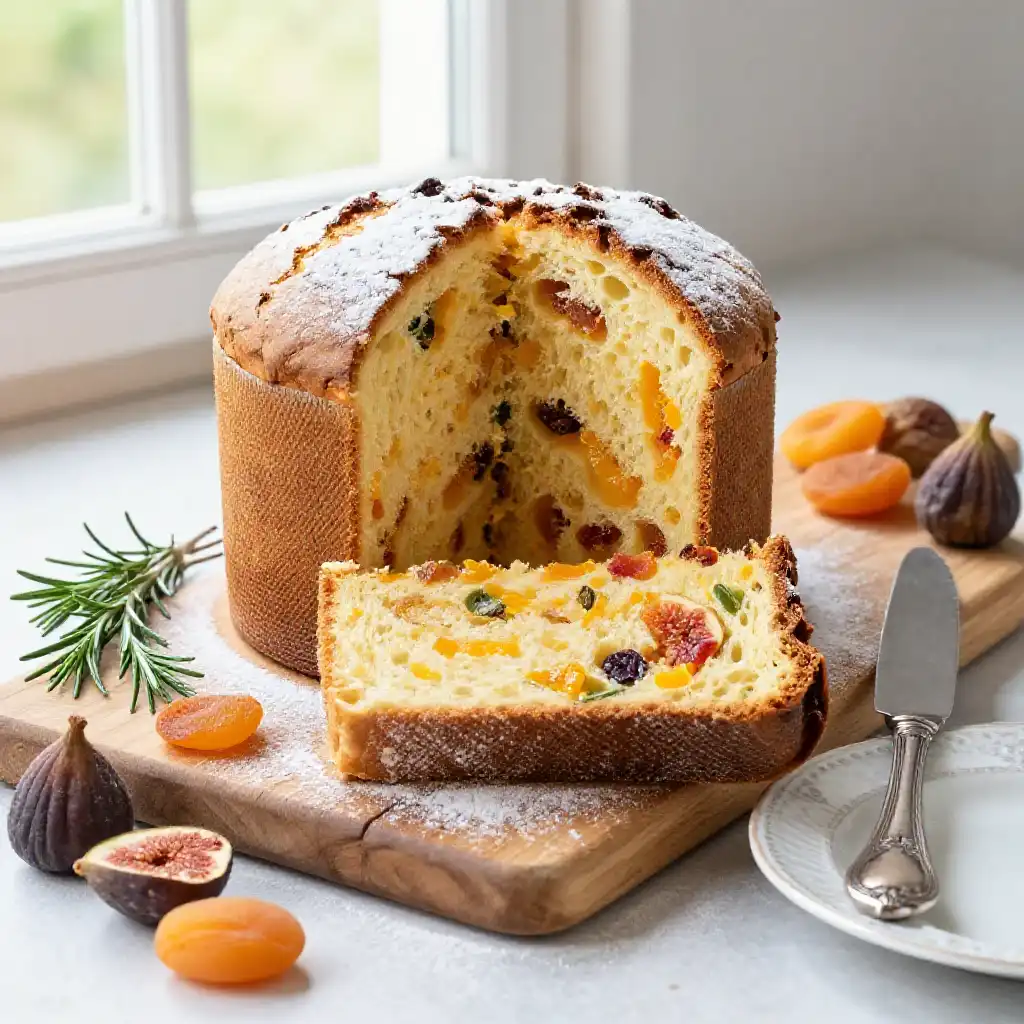
Let’s be real. Store-bought panettone can be a gamble—sometimes dry, sometimes overly sweet, often missing that soul-warming aroma. This recipe? It’s the full symphony. We’re talking about a **tender, airy crumb** that pulls apart like a dream, not crumbles like a dry sponge. Every single bite is a confetti of flavor: the sunny tang of candied citrus peel, the deep sweetness of golden raisins and chewy dried apricots, all wrapped in a buttery, vanilla-scented dough that feels impossibly light. It’s impressive, yes, but it’s also surprisingly approachable. We’re demystifying the process so you can create a masterpiece that looks like it came from a Milanese bakery. Plus, it makes your house smell like pure, unadulterated holiday joy.
The Secret Life of Yeast: Our Rising Star
Here’s the science behind the spectacle. Panettone’s legendary height and texture come from a patient, two-step rising process that’s more of a marathon than a sprint. We start with a **biga**, a stiff starter dough made with yeast, flour, and a little water. This isn’t just to get things bubbling; it’s a flavor factory. As the biga ferments slowly, it develops complex, slightly tangy notes and creates a network of gluten that’s strong yet supple. This is the backbone of our airy crumb. When we mix it into the final dough, the yeast has a powerful, mature kickstart, leading to a beautiful, steady rise. The result? Those signature irregular holes and a texture that’s ethereally soft. It’s patience that pays off in every cloud-like bite.
What You Need to Raid From the Pantry
Gathering your ingredients is the first step in the adventure. The quality here matters, so use the best you can find.
The Flavor Makers
* **The Fruit Medley:** We’re using a mix of golden raisins, chopped dried apricots, and finely diced candied citrus peel. Soaking them in a bit of fresh orange juice plumps them up and infuses them with extra flavor.
* **The Citrus Zest:** Freshly grated zest from an orange and a lemon is non-negotiable. It’s the bright, aromatic punch that cuts through the richness.
* **The Aromatics:** Pure vanilla extract and a pinch of sea salt to balance all that sweetness.
The Dough Foundation
* **The Flour:** All-purpose flour works beautifully, but for an extra-tender crumb, you can use a mix of all-purpose and a bit of bread flour for strength.
* **The Fat:** Unsalted butter, softened to room temperature. It adds richness and that signature velvety texture.
* **The Sweetener:** Granulated sugar to feed the yeast and sweeten the deal.
* **The Eggs:** They add structure, richness, and a beautiful golden color to the crust.
Let’s Get Cooking: The Step-by-Step
Making panettone is a labor of love, but each step is simple and rewarding. Ready? Let’s create some magic.
First, make your biga the night before. Combine flour, water, and a tiny bit of yeast. It will be a stiff dough. Cover it and let it sit at room temperature for 12-16 hours. You’ll see it become bubbly and fragrant.
The next day, in a large bowl, cream the softened butter and sugar until light and fluffy. Beat in the eggs one at a time, followed by the vanilla and all that glorious citrus zest. Now, add the flour and your bubbly biga. Mix until a soft, slightly sticky dough forms.
Here comes the arm workout. Knead the dough for about 10-15 minutes until it’s smooth, elastic, and passes the “windowpane test” (you can stretch a small piece thin enough to see light through it without it tearing). It’s a sign that the gluten is perfectly developed.
Gently fold in your soaked and drained fruit medley. Be careful not to overwork the dough at this stage.
Now, the first rise. Place the dough in a greased bowl, cover, and let it rise in a warm spot until doubled in size, about 1.5 to 2 hours.
Punch down the dough gently and shape it into a smooth ball. Place it in a **panettone mold** or a tall, greased coffee can. Cover and let it rise again until it crests about an inch above the rim of the mold.
Bake in a preheated 350°F (175°C) oven for 45-55 minutes. The crust should be a deep, rich brown. To ensure the inside is cooked through without burning the top, you might need to tent it with foil for the last 15 minutes.
The most crucial part? **Cooling upside down.** This prevents the giant, tender dome from collapsing on itself. Stick two skewers through the bottom of the mold and balance it over a large pot or between two chairs. Let it cool completely. This can take a few hours, but the anticipation is part of the fun!
How NOT to Mess Up Your Masterpiece
Even the best bakers have off days. Here’s how to avoid the most common panettone pitfalls.
* **The Sad, Flat Dome:** If your panettone doesn’t rise high enough, your yeast might be tired or your dough was too cold. Make sure your ingredients are at room temperature and your rising spot is cozy (around 75-80°F).
* **The Dense Brick:** Over-measuring flour is a classic culprit. The best way to measure flour is to spoon it into your measuring cup and level it off with a knife. Don’t scoop directly from the bag! Also, proper kneading is essential for developing the gluten structure that gives it lift.
* **The Burnt Crust, Raw Inside:** This is why we tent with foil. If the top is browning too quickly, cover it loosely with aluminum foil to allow the inside to catch up without scorching.
Serving Vibes: Setting the Scene
Panettone is the star of any holiday table, but it’s also perfect for a quiet, cozy afternoon. Imagine this: a rainy day outside, a pot of hot tea or a creamy smoothie (for inspiration, check out **[indixer.com/category/smoothies-drinks/](https://indixer.com/category/smoothies-drinks/)**) steaming beside you, and a thick, buttery slice of this golden cake on your plate. It’s not just a dessert; it’s an experience. Slice it thick and serve it as is, or get fancy: toast a slice and slather it with mascarpone cheese, or use leftovers to make an incredible bread pudding. It’s the centerpiece of your holiday brunch, the sweet ending to a festive dinner, or the perfect gift for a neighbor that says, “I put in the effort because you’re worth it.”
For more incredible festive bakes, you can always explore our collection of recipes at **[slapid.com/recipes//](https://slapid.com/recipes//)**.
Panettone Puzzles: Your Questions, Answered
How to freeze Italian Panettone Cake with Dried Fruits and Citrus?
This is the best way to make it ahead! Once completely cooled, wrap the entire panettone tightly in two layers of plastic wrap, then a layer of aluminum foil. It will keep beautifully in the freezer for up to 3 months. To serve, let it thaw, still wrapped, at room temperature for several hours or overnight. This prevents it from drying out.
What are the calories in Italian Panettone Cake with Dried Fruits and Citrus?
While it’s a treat, it’s worth every bite! A typical slice (about 1/12th of the cake) can range from 250-350 calories, depending on the exact amount of butter and fruit used. The candied fruits and sugar contribute to the sweetness, but you’re also getting the joy of a homemade holiday tradition.
Can I use different dried fruits in my panettone?
Absolutely! While the classic trio is golden raisins, candied orange peel, and sometimes citron, feel free to customize. Chopped dried figs, cherries, or even dried cranberries can be delicious. Just make sure they are finely chopped and not too heavy, or they might sink to the bottom.
My dough isn’t rising. What did I do wrong?
Don’t panic! First, check your yeast. Is it expired? Second, is your kitchen too cold? Yeast loves warmth. Try placing the bowl in a turned-off oven with the light on, or near a warm radiator. Give it time; sometimes it just needs a little nudge.
Do I need a special panettone mold?
While traditional tall, cylindrical molds give you that iconic shape, you can use a deep, tall coffee can (make sure it’s clean and grease it well!) or even a large, heavy-duty paper baking cup set on a baking sheet. The key is having tall sides to support the dough as it rises.
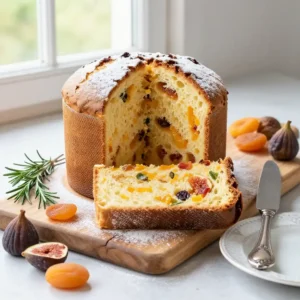
Italian Panettone Cake with Dried Fruits and Citrus

Ingredients
Ingredients
- 4 cups all-purpose flour plus extra for dusting
- 0.5 cup granulated sugar
- 1 packet active dry yeast about 2 1/4 teaspoons
- 1 cup whole milk warmed to 110°F
- 4 large eggs room temperature
- 0.5 cup unsalted butter softened, plus extra for greasing
- 1 cup mixed dried fruit such as raisins, currants, and chopped apricots, soaked in warm water for 30 minutes and drained
- 0.5 cup candied citrus peel finely chopped
- 1 tsp vanilla extract
- 1 tsp orange zest from one orange
- 0.5 tsp salt