When Sunshine Decides to Bake Cookies
I’ve always believed that certain flavors have a personality. Vanilla is a warm hug, chocolate is the dramatic best friend, and passion fruit? It’s the friend who shows up to the party wearing sunglasses indoors and convinces you to dance on the tables. It’s loud, unapologetic, and electric. We’re taking that wild energy and taming it just enough to fit inside the most finicky, elegant little cookie on the planet: the French macaron. Think of it as putting a lightning bolt in a tuxedo.
Let’s be real. Macarons have a reputation. They’re the high-maintenance diva of the pastry world. They demand precision, they judge your humidity levels, and they can crack under pressure. But when you pull it off? When you bite through that delicate, crisp shell and get hit with a cloud of chewy almond meringue and a burst of sunny, tart passion fruit curd? It’s a religious experience. It’s worth every single second of sifting.
A Tropical Tête-à-Tête: The Flavor Alchemy
Why this specific combination? Because it’s a masterclass in balance. A plain sweet macaron is lovely, sure, but it can feel a bit… one-note. It’s like listening to a song with only the melody. The passion fruit curd is the bass line, the harmony, the electric guitar solo all rolled into one. It’s intensely tart, slightly floral, and cuts straight through the sweetness of the meringue shells. This isn’t just a cookie; it’s a conversation between sweet and sour, crisp and creamy, and the result is pure harmony.
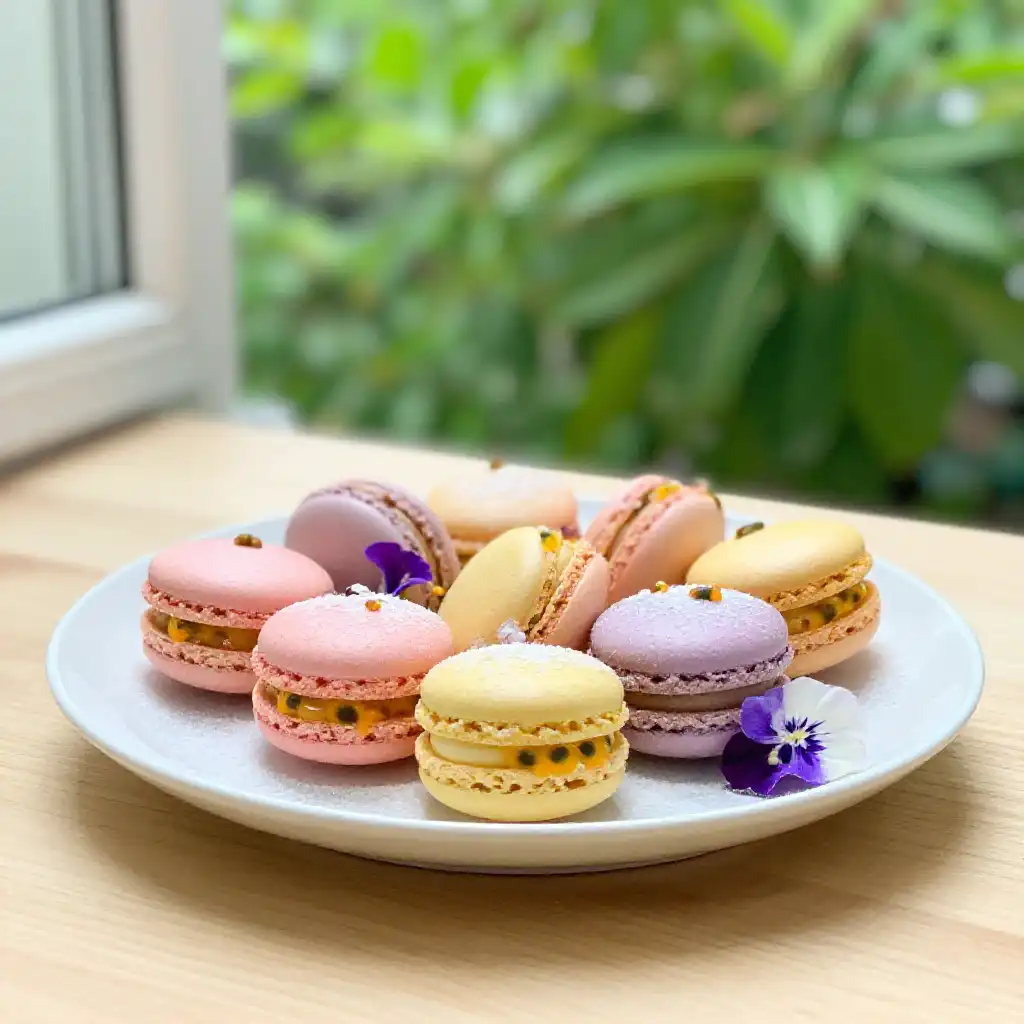
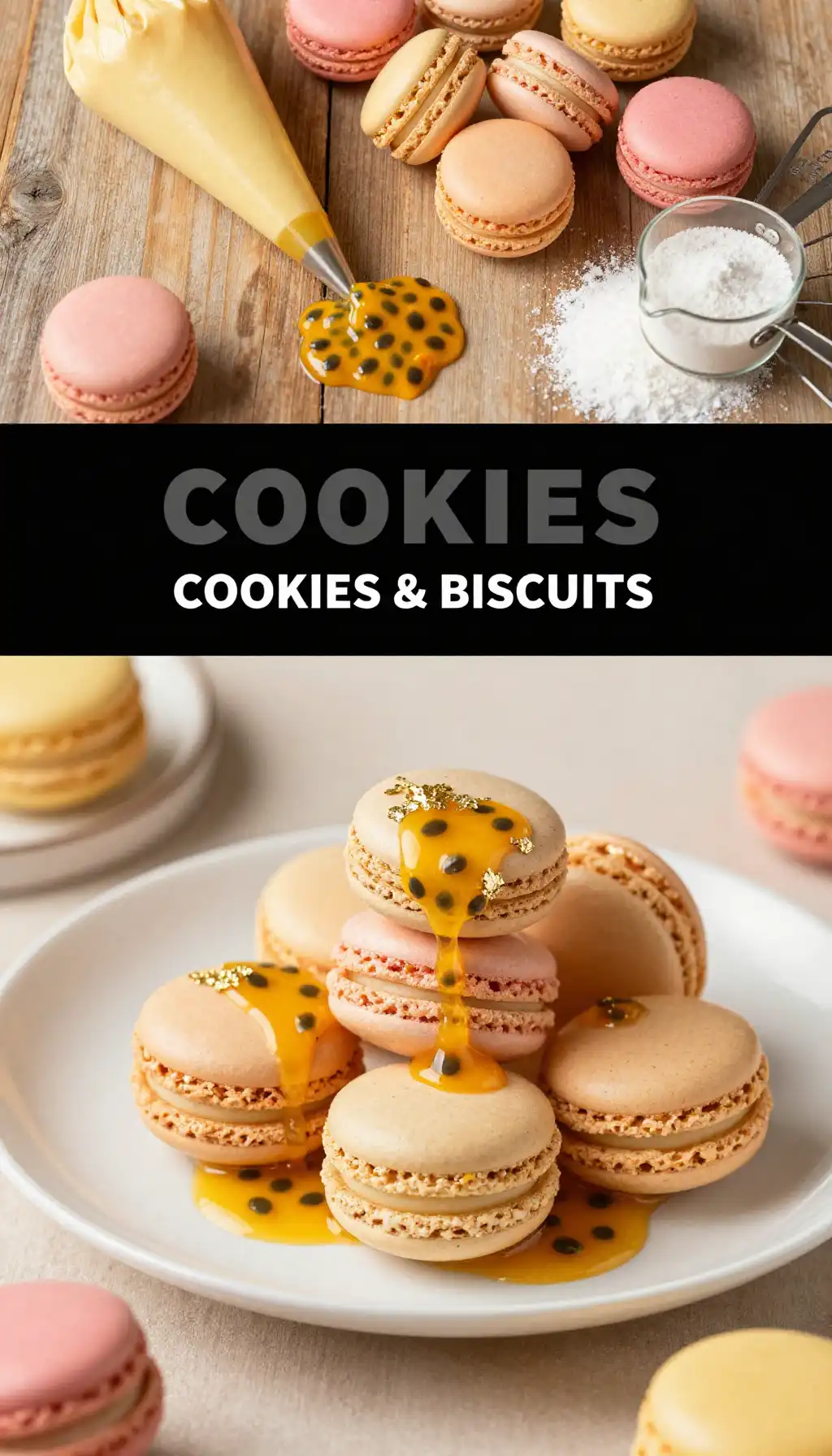
Plus, let’s talk aesthetics. That pale, sunshiny yellow curd sandwiched between pristine white, ivory, or pastel shells is an absolute showstopper. It’s the kind of treat you bring out when you want people to gasp before they even take a bite. If you’re looking for other showstopping ideas, I’ve got a whole collection of recipes that are sure to impress over on the main page. But for now, let’s focus on this tropical masterpiece.
The Soul of the Shell: It’s All About the Almond Flour
The secret weapon here isn’t the oven or the whisk—it’s the almond flour. This isn’t the time for lumpy, coarse almond meal you ground up in a blender five minutes ago. You need almond flour that’s as fine as powdered sugar, a flour that whispers when you touch it. Why? Because the structure of a macaron is essentially a meringue reinforced by a web of almond particles. If those particles are too big, the web is weak, and your macaron will be fragile and have “nipples” on top (the technical term, I promise).
We aren’t just looking for flavor; we are looking for chemistry. The almond flour provides the fat and the body, creating that iconic chewy interior. But here’s the secret: you must sift it. You will sift it until you question your life choices. You will sift it until your arm hurts. You will sift out every single tiny rock of almond until you are left with a pile of dust. That dust is what creates the smooth, glossy dome we all crave. It’s the difference between a rustic cookie and a Parisian patisserie gem.
Let’s Get Cooking: The Macaron Tango
Alright, courage. We’re doing this. The process is a dance, a rhythm. First, the egg whites. They need to be aged, temperamental, and whipped to stiff, glossy peaks that look like they could slice through a diamond. Then comes the “macaronage”—the fateful act of folding the dry ingredients into the meringue. This is where the magic happens. You aren’t just mixing; you are deflating the meringue just enough to achieve the “lava” consistency.
How do you know it’s ready? Lift your spatula. The batter should flow off in a thick, continuous ribbon. It should take about 15-20 seconds for the ribbon to melt back into the batter in the bowl. If it plops off in clumps, you’re under-mixed. If it runs off like water, you’ve just made almond soup. Once piped, let them sit on the counter until they form a dry “skin.” This is non-negotiable. This skin is what forces the air out the bottom during baking, giving you those beautiful “feet.” Speaking of baking, if you’re a fan of this method, you might love the precision of baking recipes found elsewhere too.
Common Pitfalls: How Not to Weep into a Bowl of Almond Flour
The Hollow Heartbreak: You crack one open and it’s empty inside, just a shell. This usually means your meringue wasn’t stable enough or you over-mixed the batter, knocking out all the air. Treat your meringue with respect; don’t be afraid to really whip it up before you start the folding process.
The Spreading Slick: You pipe perfect circles, and ten minutes later they look like a melted modern art sculpture. Your batter was too wet or you skipped the skin-forming rest. If your kitchen is humid, you might need to sit in front of a fan with your baking sheets for a while. It sounds dramatic, but so are flat macarons.
The Brown Blotches: Your feet are beautiful but the tops are tan. Your oven is a liar and a tyrant. It’s running too hot. Get an oven thermometer. Everyone always thinks their oven is fine; most aren’t. Lower the temperature and bake a little longer. We want pale, elegant shells, not toasted almonds.
Serving Vibes: The ‘Dolce Vita’ Moment
These aren’t cookies for snacking while scrolling through your phone. This is a “put on a record and light a candle” kind of treat. They are perfect for a bridal shower, a sophisticated afternoon tea, or that moment on a Tuesday when you just decided you deserve something exquisite. Serve them on a simple white plate to let the colors pop, perhaps with a cup of Earl Grey tea or a sparkling passion fruit soda. The contrast of the crisp shell, the yielding chew, and the explosion of tart curd is a full sensory event.
Imagine a warm afternoon, the scent of almonds and tropical fruit in the air. You pick one up, careful not to smudge the delicate shell. The first crunch is audible. Then, the soft interior, and finally, the curd. It’s vibrant, zesty, and just sweet enough to make you close your eyes for a second. That’s the moment we’re chasing. That’s the goal.
Leftovers? Here’s the Plan
Okay, let’s say you have some left. (Who are you and how are you so disciplined?) Macarons are actually best eaten the next day. The moisture from the filling seeps into the shell, softening it from the inside out and melding the flavors into one cohesive bite. Store them in an airtight container in the refrigerator for up to 5 days. Let them sit at room temperature for about 20 minutes before serving to wake up the flavors and textures.
Now, can you freeze these little gems? Absolutely. This is the secret to making them ahead for an event. Arrange the filled macarons in a single layer in a sturdy, airtight container. You can layer them with parchment paper, but don’t let them touch. Freeze them for up to a month. The best part? You can pull them out and let them thaw, still in the container, in the fridge for a few hours. They will taste like you just made them. It’s culinary time travel.
French Macarons with Passion Fruit Curd: Your Questions, Answered
How to make French Macarons with Passion Fruit Curd easy?
The word “easy” is relative with macarons, but you can make the process smoother. The key is preparation. Sift everything beforehand. Have all your tools ready. Use a kitchen scale for absolute precision. The curd can be made a day in advance. By breaking it down into manageable steps, the actual baking process feels less chaotic. It’s a marathon, not a sprint.
What are the calories in French Macarons with Passion Fruit Curd?
Let’s not talk numbers and let’s talk joy. A typical filled macaron hovers around 80-120 calories per cookie, depending on the size and filling density. Since these are packed with a fruit curd rather than a heavy buttercream, they feel lighter and more refreshing. They are a small indulgence, but a potent one.
Why did my macarons crack?
Ah, the dreaded crack. Usually, this points to two culprits: trapped air or oven temperature. If you didn’t tap the baking sheet firmly on the counter after piping to release air bubbles, those bubbles will expand in the heat and crack the shell. Or, as mentioned, your oven is simply too hot, causing the feet to erupt violently and split the top. Lower the temp, tap the tray, and try again.
Can I use bottled passion fruit juice for the curd?
You can, but fresh is truly best if you can get it. Bottled juice often has added sugars and preservatives that can alter the texture of your curd, making it less vibrant. If you must use bottled, look for 100% pure passion fruit juice or puree and give it a taste. You may need to adjust the sugar in the curd recipe accordingly to avoid a cloying result.
How do I get the vibrant yellow color for the curd?
The color comes from the fruit pulp itself! Strain the passion fruit pulp to remove the seeds, and use that beautiful, dark yellow juice. If your fruit is particularly pale, you can add a tiny pinch of turmeric for color (it won’t affect the taste), but the beauty of this curd is its natural, sunny hue. Don’t be afraid of the black seeds; they are flavor bombs, but for a silky smooth curd, strain them out after cooking.
French Macarons with Passion Fruit Curd

Ingredients
Ingredients
- 1 cup almond flour finely ground, sifted
- 1.75 cup powdered sugar sifted, divided
- 3 large egg whites room temperature
- 0.25 cup granulated sugar for meringue
- 0.5 cup passion fruit puree strained, for curd
- 2 large egg yolks for curd
- 0.25 cup unsalted butter cubed, for curd
- 2 tbsp lemon juice fresh, for curd
- 0.5 tsp vanilla extract for meringue
- 1 pinch salt for meringue