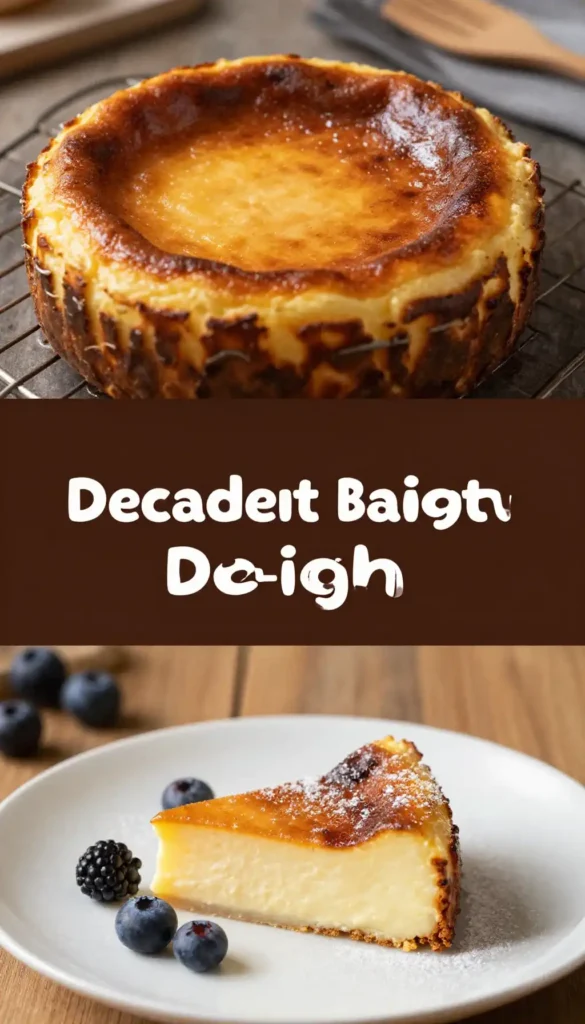
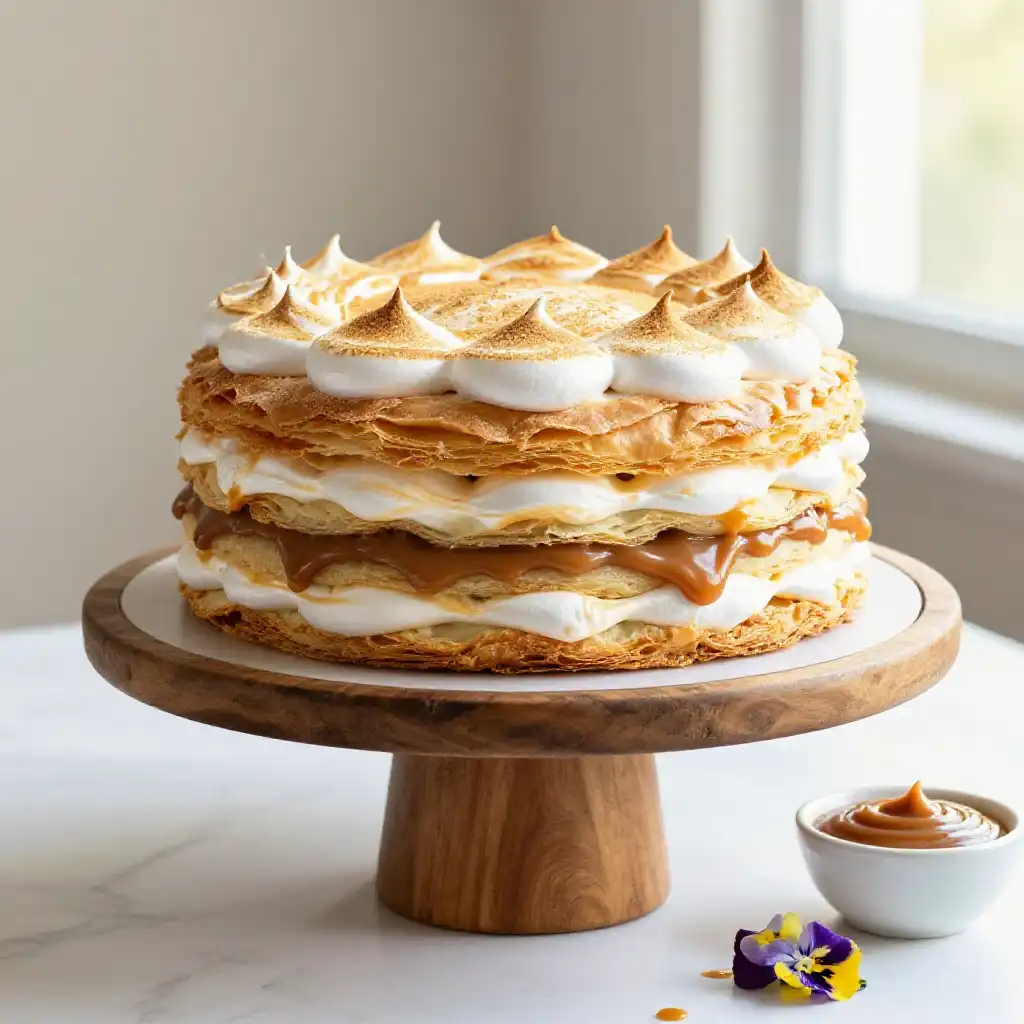
There’s a moment when you slice into a proper Argentinian Rogel Cake with Dulce de Leche and Meringue that feels like slow-motion in a movie. The knife glides through the snowy meringue cap, then meets a satisfying, almost imperceptible resistance from the crisp pastry layers beneath. A whisper of caramelized sugar and toasted meringue hits your nose first. Then, the crackle. It’s a sound that tells you everything you need to know: this is not a soft, spongy cake. This is architecture. This is a celebration stacked high.
I first had a version of this on a humid Tuesday in a bustling Buenos Aires cafe. It was served with a tiny fork and no instructions. One bite, and I understood. The creamy, almost fudgy dulce de leche, the delicate snap of the pastry, the cloud of sweet meringue on top… it’s a textural symphony. It’s the kind of dessert that shuts down conversation for a solid three minutes. You know the ones. You’re not just eating it; you’re experiencing it. And you’ll want to make it. Trust me.
Recommended Product
 -40%
-40%
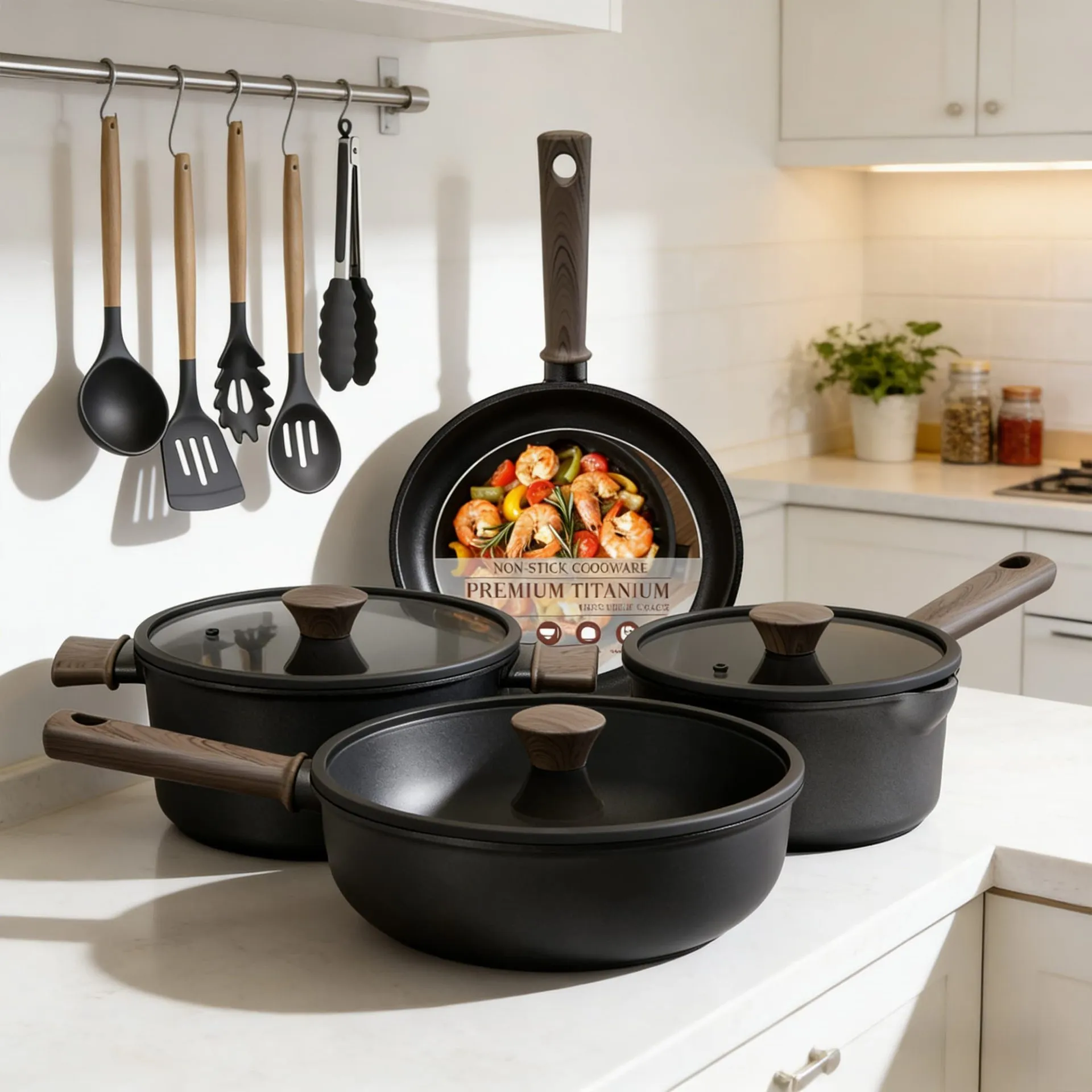
Astercook 21‑Piece Non‑Stick Ceramic Cookware Set with Detachable Handles
- Pieces →: 21‑piece set with pots, pans, lids & accessories
- Handles →: Secure removable/detachable handle system for space saving & oven use
- Non‑Stick Coating →: Premium ceramic non‑stick free of harmful PFOA chemicals for healthier cooking
- Cleanup →: Easy to clean thanks to non‑stick surface and detachable handles
The Sweet Alchemy of Dulce de Leche
Let’s talk about the soul of this cake, the glorious, sticky, life-affirming stuff that is dulce de leche. It’s not just a caramel. Calling it a caramel is like calling a symphony a bit of noise. It’s a transformation. You take a can of sweetened condensed milk and you gently coax it into becoming something else entirely. Through the magic of heat and time, the sugars slowly caramelize and the milk proteins join the party, creating a deep, complex flavor that’s milky, buttery, and toasty all at once.
🍳 Used in this recipe
Get It on Amazon Basics✔ Free Delivery | ✔ Top Rated | ✔ Budget-FriendlyThe science is simple but requires patience. The Maillard reaction, that beautiful browning process, is working its overtime magic here. As the mixture heats, the lactose and proteins rearrange themselves into new flavor compounds. The result? A thick, spreadable sauce that has the power to make a simple piece of bread feel like a royal treat. For this cake, we need it to be thick enough to hold up between layers without turning the pastry into a soggy mess. It’s the rich, decadent mortar holding our delicious castle together. A good quality store-bought version works wonders, but if you’ve ever wanted to feel like a kitchen wizard, making your own is a rite of passage. It’s just milk and sugar, but the result is pure gold.
What You Need to Raid the Pantry
Alright, let’s gather our building blocks. The beauty of this Argentinian Rogel Cake with Dulce de Leche and Meringue is that the ingredient list is surprisingly short. It’s all about quality, not quantity. You’re not hiding a dozen exotic spices here. You’re letting a few key players shine. Think of this as a casting call for the most important dessert of your week.
First, the foundation. You’ll need a stack of those ultra-thin pastry sheets. Sometimes they’re called strudel sheets or phyllo dough, depending on your supermarket’s mood. The key is that they are paper-thin and delicate. We’re going to toast them, which brings out a wonderful nutty flavor. Then, the star of the show: a generous amount of high-quality dulce de leche. Don’t skimp here. This is what gives the cake its soul. And for the grand finale, a big batch of fluffy, glossy meringue. This means egg whites, sugar, and a splash of vanilla. Simple, pure, and utterly magnificent. That’s it. A few humble ingredients, a little bit of patience, and you’re on your way to dessert stardom.
🍳 Used in this recipe
Get It on Amazon Basics✔ Free Delivery | ✔ Top Rated | ✔ Budget-Friendly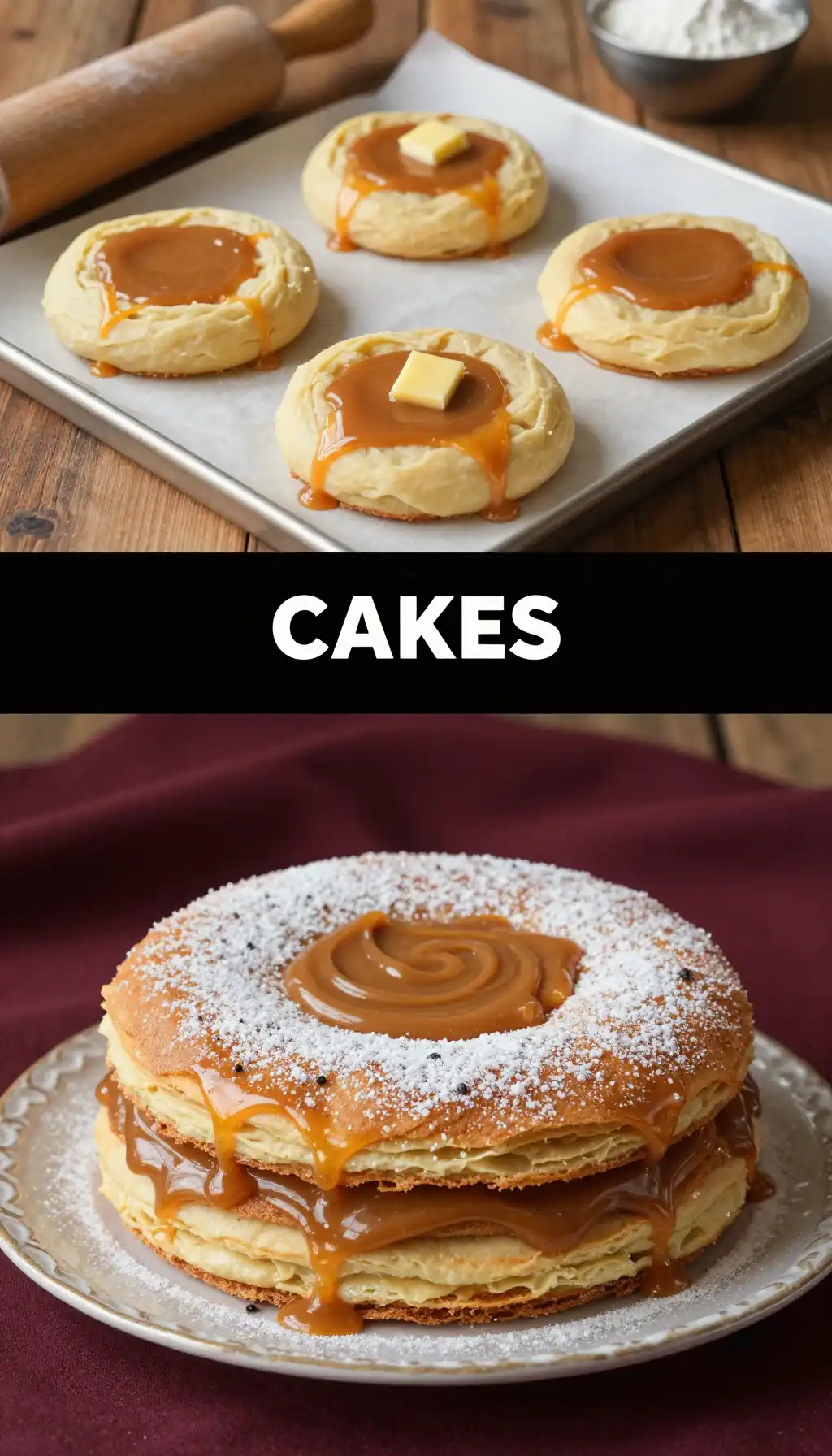
Let’s Get Cooking: The Step-by-Step
Here’s where the magic happens. This isn’t a sprint; it’s a calm, methodical dance. Put on some music, pour yourself a nice cold drink, and let’s build this masterpiece. We’re going to do this in three acts: the crunchy base, the creamy heart, and the fluffy crown.
Act I: The Crisp Foundation
First, we need to transform our delicate pastry sheets into golden, crisp discs. Preheat your oven to a moderate temperature, around 350°F (175°C). Lay out your pastry sheets one by one on a baking sheet. We’re going to bake them until they’re just barely golden and incredibly crisp. It only takes a few minutes per sheet, so watch them like a hawk! They go from perfect to burnt in the blink of an eye. Once they’re out and have cooled completely, it’s time to shape them. You’ll need a cake ring or a springform pan as your guide. Trim the baked sheets into perfect circles that fit your pan snugly. This is your precision step. A good serrated knife works best for this. Don’t worry about the scraps—they make a fantastic chef’s snack.
Act II: The Creamy Heart
Now for the luscious part. Take your dulce de leche and give it a good stir to loosen it up. If it’s very stiff, you can warm it very gently for a few seconds. You want it spreadable, not runny. Place your cake ring on a clean serving platter. Lay down your first crisp pastry disc. Spread a generous, even layer of dulce de leche over it. Don’t be shy! We’re aiming for about a dozen layers here, so repeat the process: pastry, dulce de leche, pastry. Press down gently with your palm after each layer to encourage them to settle together. Once you’ve built your tower of sweetness, cover the whole thing and let it rest in the fridge for at least a few hours, or even overnight. This is crucial. It allows the pastry to soften just enough from the moisture of the dulce de leche, taking the edge off the crunch and melding the flavors.
🍳 Used in this recipe
Get It on Amazon Basics✔ Free Delivery | ✔ Top Rated | ✔ Budget-FriendlyAct III: The Fluffy Crown
Your cake is chilled and settled. It’s time for its grand finale: the meringue. For this, you need a spotlessly clean bowl and whisk. Any trace of fat or grease will sabotage your meringue. In a heatproof bowl set over a pot of simmering water (a double boiler), whisk together your egg whites and sugar until the sugar has completely dissolved. This gentle heat cooks the egg whites, making the meringue safe to eat and incredibly stable. Take it off the heat and whip it with an electric mixer until it forms stiff, glossy peaks. It should look like a beautiful, snow-white cloud. Now, remove the cake ring from your chilled cake. Using a spatula, artfully swoosh and swirl that gorgeous meringue all over the top and sides of the cake. You can leave it rustic or pipe it on for a more elegant look. Now, here’s the final flourish: toast it! You can use a kitchen torch for a professional finish, or pop it under your oven’s broiler for a minute or two. Keep a very close eye on it—you want a beautiful golden-brown, not a charcoal briquette. The smell of toasted sugar at this stage is pure, unadulterated bliss.
How NOT to Mess This Up: A Guide to Common Pitfalls
Even the most straightforward recipes have their sneaky pitfalls. This cake is forgiving, but it has its quirks. Here’s how to stay on the right side of delicious.
The Soggy Bottom Syndrome: This is the number one fear. If your dulce de leche is too thin or you don’t let the cake chill properly before serving, you risk a soft, sad base. The fix? Ensure you’re using a thick, high-quality dulce de leche and respect the chilling time. It’s not just for setting the cake; it’s for achieving that perfect textural balance between the creamy filling and the crisp pastry. Patience, grasshopper.
🍳 Used in this recipe
Get It on Amazon Basics✔ Free Delivery | ✔ Top Rated | ✔ Budget-FriendlyThe Weeping Meringue: Sometimes, meringue can start to “weep” little sugary beads of liquid after it sits. This happens if the sugar isn’t fully dissolved or if the meringue is under-whipped. The double-boiler method is your best friend here. Whisk until you can’t feel any gritty sugar between your fingers. Then, whip it like you mean it until it’s thick, glossy, and holds its shape proudly.
The Toasting Takedown: Broiling is a powerful tool, but it’s a bit like a bull in a china shop. Don’t walk away! That beautiful golden-brown can become a bitter, blackened mess in under 15 seconds. Stand there, watch it, and turn the pan as needed for even color. The anticipation is part of the fun.
Serving Vibes: Setting the Scene
This cake isn’t for a quick Tuesday night treat. It’s an event. It demands a certain level of ceremony. This is the cake you bring out after a long, celebratory meal when everyone is relaxed and happy. It’s a showstopper for birthdays, anniversaries, or that Sunday dinner where you want to leave a lasting impression. The ideal setting is a well-lit table, maybe with a few friends or family members whose eyes widen as you carry it in.
🍳 Used in this recipe
Get It on Amazon Basics✔ Free Delivery | ✔ Top Rated | ✔ Budget-FriendlyBecause of its richness, small slices are the secret. You’re not cutting a wedge; you’re cutting a sliver. It’s intensely sweet, so a little goes a long way. Pair it with a strong, unsweetened coffee or a simple herbal tea to cut through the sweetness. It’s also a fantastic dessert to make ahead of a party, as the flavors actually improve after a day or two of resting. It’s a celebration on a plate, a testament to the idea that the best things in life are built layer by layer.
Frequently Asked Questions
Can I freeze my Argentinian Rogel Cake with Dulce de Leche and Meringue?
You can, but with a strategic approach. The meringue is the tricky part. It’s best to freeze the cake *before* adding the meringue topping. Build your layered cake, wrap it tightly in plastic wrap and then foil, and freeze for up to a month. When you’re ready to serve, thaw it in the refrigerator overnight. Then, make and apply the fresh meringue and toast it just before serving. This will give you the best texture and avoid any potential weeping or sogginess from the thawing process.
How many calories are in an Argentinian Rogel Cake with Dulce de Leche and Meringue?
This is definitely a treat, not a light snack! It’s rich and decadent. A typical slice from a 10-inch cake can range from 350 to 500 calories, depending on the thickness of your layers and how generous you are with the dulce de leche. Remember, we’re going for a small, satisfying slice here. It’s all about savoring the flavor, not counting the numbers. Life’s too short!
🍳 Used in this recipe
Get It on Amazon Basics✔ Free Delivery | ✔ Top Rated | ✔ Budget-FriendlyIs it difficult to learn how to make Argentinian Rogel Cake with Dulce de Leche and Meringue?
Honestly, no! The fear of pastry can be real, but this is one of the most easy Argentinian Rogel Cake with Dulce de Leche and Meringue recipes out there. The hardest part is the patience required for chilling and the careful handling of the delicate pastry sheets. If you can spread peanut butter and use a cake ring, you can make this. It’s more about assembly than complex baking techniques, which makes it a perfect project for a weekend baker looking to impress.
Can I make this with homemade dulce de leche?
Absolutely, and it’s fantastic that way! Making it from scratch is surprisingly simple. You just need a can of sweetened condensed milk. You can either simmer the unopened can in water for 2-3 hours (make sure the can is always submerged!) or pour the milk into a heatproof dish and bake it in a water bath. It gives you a wonderful sense of accomplishment and a flavor that’s hard to beat. Just make sure it’s thick and cooled completely before you start layering.
What’s the best way to cut clean slices?
For those perfect, bakery-style slices, your knife is your best tool. Use a long, thin, sharp knife. Dip the blade in hot water and wipe it clean between each cut. This will glide through the meringue and pastry layers without dragging or crumbling. It’s a small detail that makes a huge difference in the final presentation.
🍳 Used in this recipe
Get It on Amazon Basics✔ Free Delivery | ✔ Top Rated | ✔ Budget-Friendly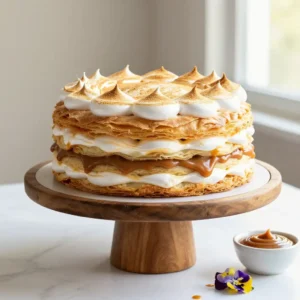
Argentinian Rogel Cake with Dulce de Leche and Meringue

Ingredients
Ingredients
- 2 cups all-purpose flour sifted
- 1/2 cup unsalted butter cold, cubed
- 1/4 cup granulated sugar
- 1 large egg beaten
- 1 cup dulce de leche store-bought or homemade
- 4 large egg whites room temperature
- 1 cup granulated sugar for meringue
- 1 tsp vanilla extract
- 1 pinch cream of tartar optional, for meringue stability
- 1/4 cup powdered sugar for dusting